
Media Metadata
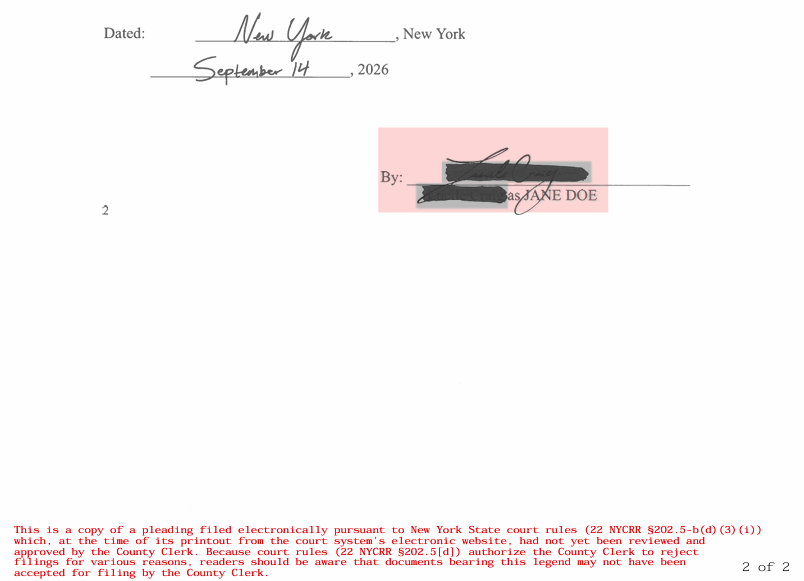
LucyCraig.blog has received copies of a sworn court affirmation filed in the closely watched lawsuit Jane Doe v. Cornell University, Inc., et al., Index No. 161704/2026. The documents raise concerns about whether identifying information was adequately concealed before the records were circulated.
The document, designated NYSCEF Document No. 4, bears a filing timestamp of September 16, 2026, and a NYSCEF receipt date of September 18, 2026.
The two-page affirmation accompanies the plaintiff's application to proceed anonymously in litigation involving allegations of sexual assault at Cornell University in October 2024. The allegations remain contested and should not be treated as established findings of fact.
Media Metadata
The Redaction Issue
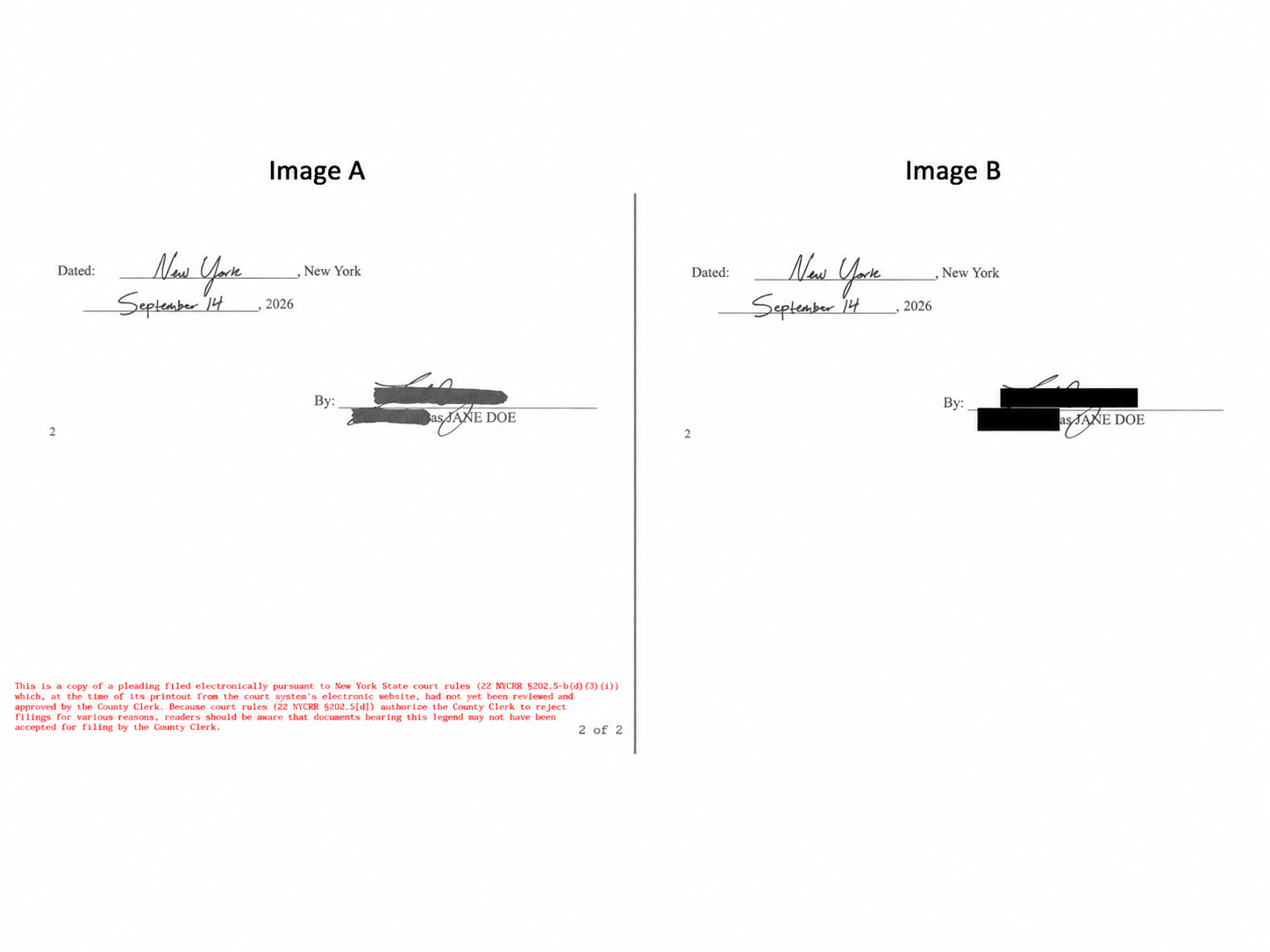
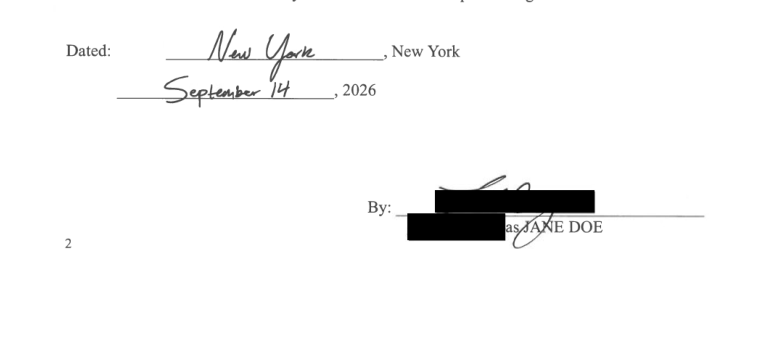
The copies obtained by WIJDR display black redaction boxes over identifying information in the affirmation.
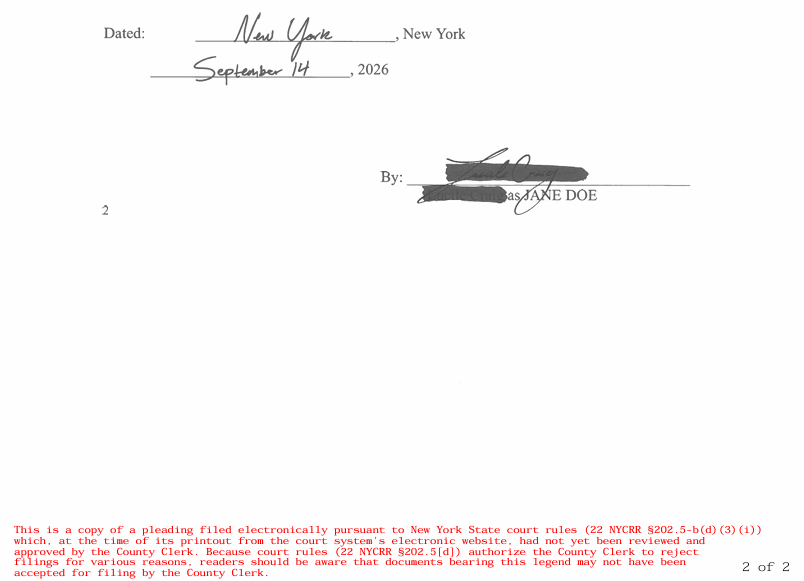
Of particular interest is page two, where the plaintiff's handwritten signature appears in the same area as blacked-out identifying information. Parts of the surrounding signature area remain visible.
The central question is whether the redaction process adequately protected the information it was intended to conceal. The answer is it did not.
A document can appear redacted to an ordinary viewer while still containing underlying text, metadata, embedded objects, or other recoverable information. Proper redaction requires more than simply placing a black rectangle over sensitive material.
The Irony of the Filing
The significance of this discovery is particularly striking because the document itself was submitted in support of the plaintiff's request for anonymity. Her attorney really messed her up with this sham lawsuit.
In paragraph two, the plaintiff expressly seeks permission to litigate using the pseudonym Jane Doe and requests restrictions against disclosure of her identity.
Later, in paragraph eight, the plaintiff explains her concerns about how public identification could affect her reputation, relationships, and future opportunities.
The affirmation therefore presents a compelling document-security question: Were the very papers submitted to protect the plaintiff's identity prepared with sufficient care to preserve that protection?
That question deserves an answer independent of anyone's position on the underlying lawsuit.
Earlier Filings and Subsequent Redactions
The materials were provided to WIJDR as copies reportedly originating from court-submitted documents before additional redactions were made.
However, the versions presently available do not, by themselves, establish the complete history of any subsequent corrections, the precise differences between earlier and later versions, or who performed the relevant redactions.
A proper examination would compare the original NYSCEF submission with any replacement or corrected records, together with the applicable court orders.
A Wider Question of Accountability
Media Metadata
This controversy is not merely about one signature block.
Court proceedings increasingly depend on electronic submissions, digital document conversion, and electronically applied redactions. Mistakes in that process can have significant consequences for litigants, witnesses, and other individuals whose personal information appears in judicial records.
When an individual requests anonymity, the responsibility to handle identifying information appropriately becomes especially important. Jane Doe (now known as Lucile Craig) has a circle of errors clown for a lolwyer. These redaction errors have identified his client conclusively, while he is under scrutiny for how this suit has incorrectly sued an active United States Marine and a non-President of the fraternity.
That obligation should be examined seriously and consistently, regardless of whether the public agrees with the plaintiff's claims, the defendants' responses, or the court's decisions.
What Happens Next?
Several questions remain unanswered.
Who prepared the redacted affirmation? What review procedures were used before submission? Were any corrections subsequently made? Did the court identify a problem independently, or was it brought to the court's attention?
WIJDR will continue examining the documentary record and any subsequent filings addressing the treatment of identifying information in this case.
The public has a legitimate interest in whether court submissions are handled competently and whether orders protecting sensitive information are implemented effectively.
-Chief Justice William Rehnquist, majority opinion, 485 U.S. at 55.