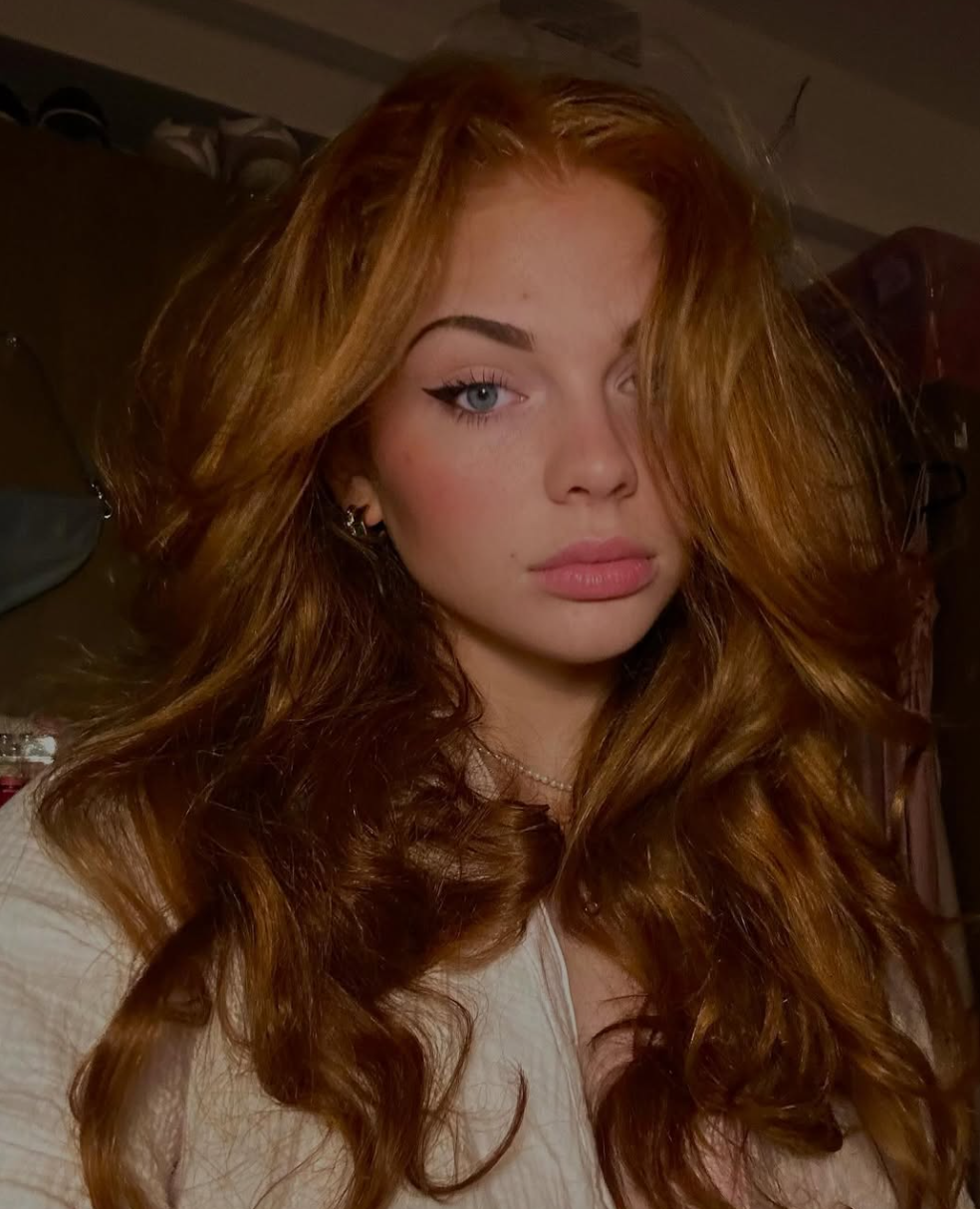
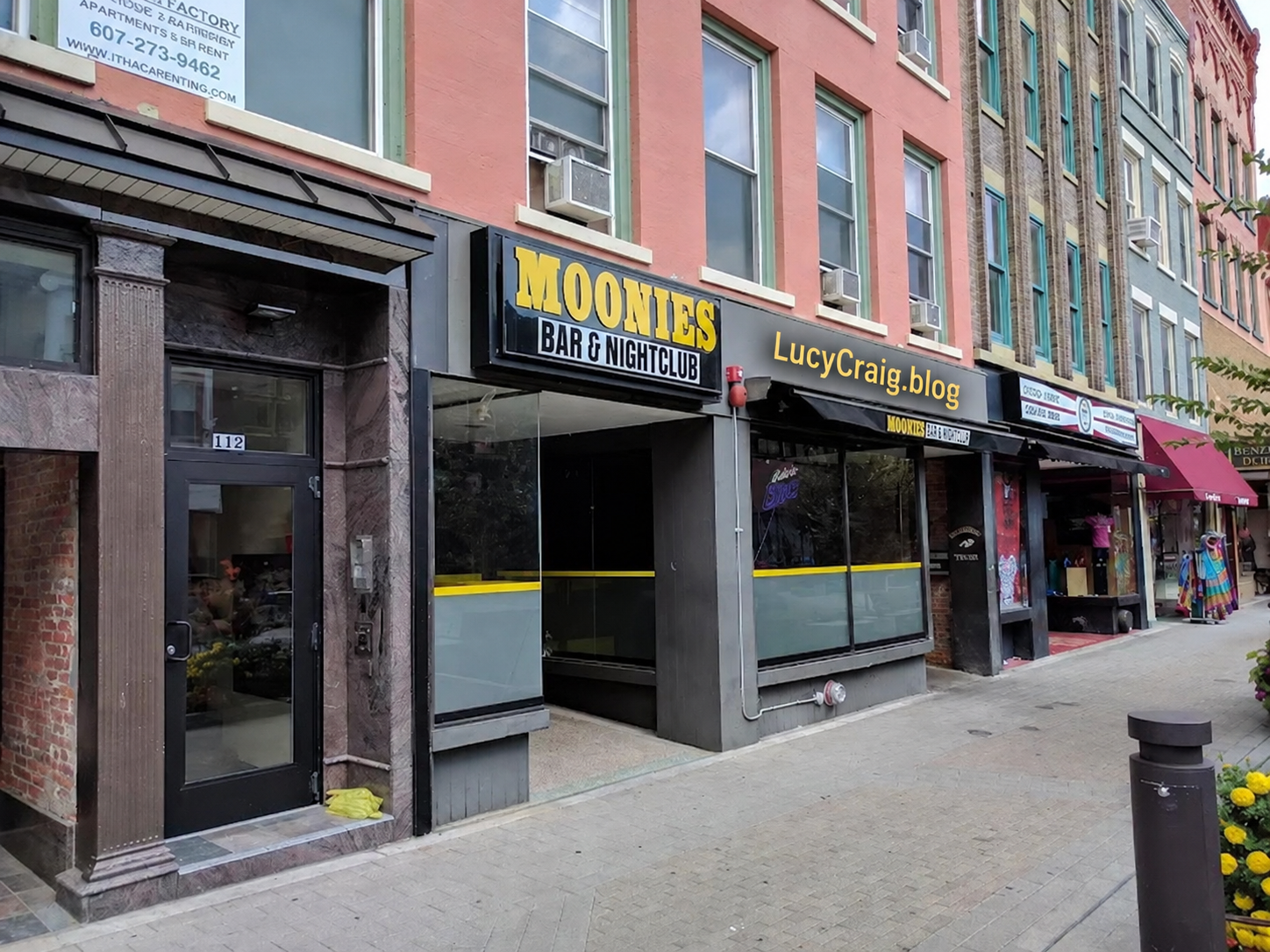
Media Metadata
The civil lawsuit arising from the alleged October 2024 sexual assaults at Cornell University's Chi Phi fraternity house names numerous defendants, including Cornell University, fraternity members, fraternity organizations, a sorority, and a downtown Ithaca nightclub called Moonies Bar & Nightclub.
The claims against the fraternity members concern extraordinarily serious allegations of sexual misconduct. But the claims against Moonies raise a fundamentally different legal question: Can a bar be held civilly liable for an alleged sexual assault committed by unrelated individuals, at another location, hours after a patron left its premises?
More importantly, can the bar be held liable simply because the plaintiff claims it unlawfully sold her alcohol when she was 20 years old?
New York's highest court has already answered a closely related question, and its answer presents a substantial obstacle to Jane Doe's lawsuit against Moonies.
This analysis examines how competent defense counsel might seek the complete dismissal of Moonies from the litigation, relying on New York statutory law, controlling judicial decisions, and the factual allegations contained in the plaintiff's own documents.
A note regarding the assumptions underlying this analysis
For purposes of this legal examination only, we will accept the factual allegations contained in both Jane Doe's November 2024 police statement and her September 2026 civil complaint as true, wherever those allegations can reasonably be reconciled.
Where the two documents materially differ, we will identify those differences and consider their legal significance without attempting to determine which account is more accurate.
We will also assume, strictly for purposes of the legal analysis, that the alleged sexual assaults occurred as described in the civil complaint.
This is not a finding that any allegation is true, nor is it an assertion that any defendant committed unlawful conduct. No independent determination of guilt, liability, credibility, or the accuracy of either document is being made here.
The plaintiff, sometimes identified in public discussion as Lucy Craig, will be referred to throughout this article solely as Jane Doe, Doe, or Plaintiff, consistent with the designation used in her civil complaint.
The issue here is not whether the alleged assaults occurred. It is whether the allegations, even if accepted, establish an actionable civil claim against Moonies under New York law.
That distinction is essential.
1. The first problem for Jane Doe: New York does not ordinarily allow first-party Dram Shop lawsuits
The most substantial defense available to Moonies arises from an established principle of New York law.
Under New York's Dram Shop Act, General Obligations Law § 11-101, certain people injured by an intoxicated individual may sue those who unlawfully furnished or sold alcohol to that individual.
But there is an important limitation: The intoxicated individual generally cannot recover under the statute for injuries resulting from their own voluntary intoxication.
That remains the general rule even when the person was legally too young to purchase alcohol.
The controlling precedent is Sheehy v. Big Flats Community Day, Inc., 73 N.Y.2d 629 (1989).
In Sheehy, a 17-year-old plaintiff alleged that she had been served beer unlawfully, including while visibly intoxicated. She subsequently visited another establishment and was seriously injured when a vehicle struck her as she crossed a highway.
She sued the alcohol providers, arguing that the unlawful service contributed to her injuries.
The New York Court of Appeals rejected her claim against the relevant alcohol provider.
The court concluded that the criminal prohibition against furnishing alcohol to underage individuals did not create an independent private right of action for an underage drinker injured as a result of her own consumption. The court also declined to recognize common-law liability on the facts before it.
The distinction was deliberate: the Legislature had established a statutory framework governing civil alcohol liability, and the courts were not free to expand it simply because the conduct involved an underage drinker.
That decision could form the centerpiece of Moonies' defense.
Here, Jane Doe alleges that Moonies unlawfully served her alcohol when she was 20 years old, contributing to her intoxication and eventual inability to consent to sexual activity.
Moonies would argue that the plaintiff is attempting to recover as the allegedly intoxicated recipient of the unlawful service—the category of plaintiff generally excluded by the first-party Dram Shop rule.
There is, of course, an important factual distinction between Sheehy and this lawsuit. Doe alleges that independent third parties intentionally sexually assaulted her. Her attorneys could argue that the injuries were inflicted by those individuals, not simply caused by her intoxication.
But that does not eliminate the statutory problem.
The first-party rule was reaffirmed in Kudisch v. Grumpy Jack's, Inc., 112 A.D.3d 788 (2013), and more recently discussed in Drive New Jersey Insurance Co. v. RT Hospitality Group, LLC, 2025 NY Slip Op 02188.
The latter decision reiterates that the Dram Shop Act generally does not provide recovery to someone injured as a result of their own intoxicated condition, and that the person's youth does not automatically create an exception.
A defense attorney would therefore ask the court to determine whether Doe's statutory claims against Moonies are, in substance, impermissible first-party intoxication claims.
Legal authorities:
Sheehy v. Big Flats Community Day, Inc., 73 N.Y.2d 629 (1989): https://www.neochart.com/catalog/cases/ny-2d/volume_73/0629_01/index.html
Kudisch v. Grumpy Jack's, Inc., 112 A.D.3d 788 (2013): https://law.justia.com/cases/new-york/appellate-division-second-department/2013/2012-08966-0.html
Drive N.J. Insurance Co. v. RT Hospitality Group, LLC (2025): https://www.nycourts.gov/reporter/3dseries/2025/2025_02188.htm
2. Moonies is not accused of serving alcohol to any of the alleged perpetrators
This is arguably the second most significant defect in Doe's Dram Shop theory.
Consider the individuals whose alleged conduct forms the basis of the lawsuit.
The complaint identifies Matthew Ingalls, Johnathan Newell, Winston Lee, Gillio Lopes, Diego Sarabia, Scott Norris, and Scott Kretzschmar as the seven student defendants allegedly involved in the sexual misconduct.
Yet the complaint does not allege that Moonies sold alcohol to any one of these seven men.
Not one.
Instead, the allegations concern alcohol furnished to Jane Doe herself.
This distinction matters because a conventional Dram Shop action involving an intoxicated assailant is based on unlawful service to the person who caused the injury.
In Catania v. 124 In-To-Go Corp., 287 A.D.2d 476 (2001), for example, a nightclub was found liable under the Dram Shop Act after serving alcohol to a visibly intoxicated individual who subsequently assaulted another patron.
The crucial distinction is that the nightclub allegedly served the assailant—not merely the person injured by the assault.
The appellate court considered whether the illegal sale of alcohol bore a reasonable connection to the assailant's subsequent conduct.
In Jane Doe's complaint, that essential relationship is absent.
Moonies is accused of serving Doe. It is not accused of supplying alcohol to the individuals alleged to have assaulted her.
The defense would argue that neither § 11-101 nor § 11-100 authorizes recovery merely because unlawful service to the plaintiff arguably increased her vulnerability to independent misconduct by third parties.
The statutes contain important differences, but both would face the first-party liability objection on the facts alleged here.
This is not a minor technicality. It goes directly to whether the plaintiff has pleaded a legally recognized statutory cause of action.
Authority: Catania v. 124 In-To-Go Corp., 287 A.D.2d 476 (2001): https://law.justia.com/cases/new-york/appellate-division/2001/287-ad2d-476.html
3. The alleged assaults did not occur at Moonies
Let us examine the plaintiff's own chronology.
According to paragraphs 135–175 of the civil complaint, Doe consumed vodka before leaving her sorority house, traveled to Moonies at approximately 8:30 p.m., and arrived around 9 p.m.
She departed Moonies around 10 p.m.
She then went to an entirely different establishment, Lot 10 Bar and Lounge.
At approximately 11 p.m., she left Lot 10 and proceeded to the Chi Phi fraternity house.
The alleged sexual assaults occurred at that fraternity house, during events continuing into the following morning.
Thus, according to the complaint itself, there were multiple changes of location between Doe's attendance at Moonies and the alleged assaults.
Moonies did not own the fraternity house. Moonies did not operate the fraternity house. No Moonies employee is alleged to have been present or involved in the acts.
So what legal authority did Moonies possess to supervise or control the fraternity house?
None is established by the complaint.
The New York Court of Appeals addressed the boundaries of premises-related liability in D'Amico v. Christie, 71 N.Y.2d 76 (1987).
In that decision, the Court explained that a landowner's common-law responsibility to control third parties generally arises from the ability and opportunity to supervise persons on property within its control.
That obligation does not ordinarily follow those individuals everywhere they subsequently travel.
A more recent appellate decision, Shepherd v. Gallo Restaurant of Patchogue, LLC (2025), reaffirmed the importance of premises control when rejecting a common-law negligence claim involving an incident occurring beyond the defendant's area of control.
The distinction must be made carefully. The fact that injuries occur off premises does not automatically defeat a properly established statutory Dram Shop claim.
But the negligence claims against Moonies are a different matter.
Under ordinary premises-liability principles, the plaintiff must identify a legal duty owed by Moonies, a breach of that duty, and a legally sufficient causal connection to the injuries.
The complaint does not establish that Moonies controlled the fraternity house or the individuals alleged to have committed the assaults.
That presents a substantial obstacle to its common-law negligence claims.
D'Amico v. Christie, 71 N.Y.2d 76 (1987): https://www.neochart.com/catalog/cases/ny-2d/volume_71/0076_01/index.html
Shepherd v. Gallo Restaurant of Patchogue, LLC (2025): https://www.nycourts.gov/reporter/3dseries/2025/2025_07327.htm
4. Does a nightclub become a guardian simply because a patron enters its premises?
The complaint goes beyond alleging unlawful alcohol service.
Paragraphs 452–455 assert that Moonies owed Doe duties arising from a special relationship, a contractual relationship, and even a fiduciary relationship.
These allegations deserve close examination.
A nightclub owes certain legal duties to people lawfully on its premises, including duties of reasonable care applicable to foreseeable hazards.
But that does not mean the establishment automatically becomes every patron's personal guardian.
Nor does allowing someone to attend a sorority social event necessarily create an enforceable agreement to supervise that person's subsequent movements and activities throughout the night.
The complaint alleges that Moonies had a contractual relationship with Doe and with the sorority.
Yet an actual contract establishing additional protective responsibilities would need to be examined.
Was there an agreement to furnish sober monitors? Did Moonies promise to provide safe transportation? Did it undertake responsibility for escorting intoxicated students home? Did it assume continuing custody of attendees?
Those are meaningful questions.
A court cannot simply conclude that a bar owed a fiduciary duty because an attorney placed the word fiduciary into a complaint.
The pleading must ultimately support a legally recognizable relationship.
If Moonies undertook special protective obligations under an event agreement, those obligations could alter the analysis. But absent such facts, the defense has substantial grounds to challenge these allegations.
5. The causation problem: how many intervening events can be attributed to one establishment?
The complaint must do more than establish that Doe consumed alcohol at Moonies and suffered injuries later.
For ordinary negligence claims, the plaintiff must establish that the defendant's breach was a proximate cause of the legally compensable injury.
For a properly pleaded statutory Dram Shop claim, New York recognizes a different formulation requiring a reasonable or practical connection between unlawful service and resulting injury.
That distinction is important, and the defense would need to address each standard separately.
Here, Doe's own documents identify a substantial sequence of intervening events.
She allegedly drank vodka at her sorority house before visiting Moonies. After Moonies, she visited another bar. She subsequently traveled to a fraternity house, where she allegedly consumed additional alcohol and was administered marijuana and ketamine.
The alleged assaults occurred during the events at the fraternity house.
Moonies could argue that the complaint attempts to impose liability for intentional criminal conduct by unrelated individuals, without establishing the legally necessary connection between its own acts and the alleged injuries.
The defense should not claim that criminal wrongdoing always constitutes a superseding cause. That is not New York law.
But the particular nature of the intervening conduct, the physical separation between establishments, the passage of time, and the absence of any alleged relationship between Moonies and the student defendants all support a substantial causation challenge.
There is an important difference between saying alcohol may have contributed to someone's impairment and proving that a particular establishment is legally responsible for a later intentional assault by others.
6. According to the plaintiff, she was already intoxicated before reaching Moonies
The police statement and complaint agree on a particularly important point.
Doe began drinking before she ever arrived at Moonies.
In her November 2024 police statement, Doe describes consuming approximately six shots of vodka at her sorority house before departing for the evening.
She also describes having eaten relatively little that day and reports a preexisting medical condition that could contribute to dizziness or other symptoms.
The complaint likewise acknowledges in paragraph 136 that she consumed Tito's vodka at the sorority house until she was intoxicated.
For Moonies, those facts are relevant to causation and the extent of its alleged contribution to her impairment.
If Doe was intoxicated before entering Moonies, the defense would ask what additional effect the alcohol allegedly served there had, compared with the alcohol already consumed and the substances allegedly taken later.
However, prior intoxication does not automatically absolve a bar. Under the applicable statutory framework, an unlawful sale may contribute to intoxication without being its sole cause.
The strength of this argument would depend on evidence about the quantities consumed, timing, observed impairment, and any relevant medical or toxicological evidence.
It would be a useful discovery and summary-judgment issue, but not necessarily a stand-alone basis for dismissal.
7. One cocktail in the police statement; continued service in the complaint
Now we arrive at a material difference between the plaintiff's two accounts.
In the November 2024 police statement, Doe describes purchasing a Sex on the Beach cocktail at Moonies, which she believed contained approximately two shots of alcohol.
The statement does not describe a succession of additional alcoholic beverages purchased from Moonies.
Yet paragraphs 586–588 of the September 2026 civil complaint allege that Moonies continued serving Doe alcoholic beverages until she was visibly intoxicated and continued serving her beyond that point.
Those are materially different descriptions of the service alleged.
The complaint may reflect additional evidence obtained after the police statement. Its allegations cannot simply be dismissed because the earlier statement did not describe additional purchases.
Nevertheless, competent defense counsel would investigate precisely how much alcohol Moonies actually furnished.
Point-of-sale records, bartender testimony, payment records, witness statements, and any surviving surveillance could help establish the actual transaction history.
The distinction matters because repeated service to a visibly intoxicated patron is a different factual allegation from a single unlawful sale to an underage person.
But there is a critical qualification here: Even one alcoholic drink sold to someone under 21 may violate New York law.
Doe alleges that the nightclub's bouncer placed an X on her hands to indicate she was underage, yet she subsequently received an alcoholic beverage.
If established, that would present a serious compliance issue under Alcoholic Beverage Control Law § 65.
The defense cannot simply wish that problem away.
The important legal distinction is that violating an alcohol-control statute does not necessarily entitle the recipient of the alcohol to recover damages in a private lawsuit for every subsequent injury.
That is precisely why the Sheehy decision matters.
New York Alcoholic Beverage Control Law § 65: https://www.nysenate.gov/legislation/laws/ABC/65
8. Even accepting all seven sexual-assault allegations, the legal analysis against Moonies remains different
This is where public discussion of the lawsuit sometimes risks confusing two entirely different questions.
The complaint alleges that seven student defendants engaged in serious sexual misconduct, including acts committed when Doe was intoxicated or incapacitated.
For this article's purposes, we are assuming those allegations are true.
That assumption does not automatically establish liability against every institution, organization, or business named in the lawsuit.
An alleged perpetrator may face direct liability for his own conduct.
A university, fraternity, or sorority may face different questions concerning its own policies, supervision, contractual obligations, institutional knowledge, and control.
A nightclub that Doe visited earlier in the evening faces still another legal question.
The question is not simply whether Doe suffered harm.
The question is whether Moonies itself committed an actionable wrong that New York law recognizes as a basis for the damages requested.
Importantly, nothing in this defense requires proving that Doe consented to the alleged sexual activity.
Even if she could not legally consent, and even if every alleged intentional assault occurred, Moonies could still argue that New York law does not impose liability on the bar under these facts.
Those are independent legal questions.
9. The complaint's unusual allegations about a contractual relationship—and an apparent drafting error
Another difficulty for the complaint appears in paragraph 448.
The paragraph alleges that Doe resided within Moonies Bar & Nightclub and that Moonies was aware of that residence.
That is plainly inconsistent with other portions of the same complaint, which allege that she resided at the Tri Delta sorority house.
The error appears likely to be a drafting or copy-and-paste mistake.
It is not, standing alone, a winning defense. Courts do not ordinarily dismiss otherwise sufficient lawsuits because of an obvious typographical or drafting error.
But it invites closer scrutiny of the surrounding allegations.
The same section asserts that Moonies had special contractual and fiduciary duties toward Doe.
Those legal theories should not be accepted merely because they appear in a lengthy pleading alongside generalized statements about safety, supervision, and reasonable care.
Defense counsel would reasonably ask the plaintiff to identify the actual facts supporting each alleged relationship, particularly any contractual terms that would impose duties beyond the nightclub itself.
The court must distinguish factual allegations from legal conclusions that lack adequate supporting facts.
10. What about punitive damages?
The plaintiff also seeks punitive damages from Moonies.
Paragraph 465 characterizes the nightclub's conduct as intentional, malicious, wanton, reckless, and outrageous.
That language is forceful.
But forceful adjectives do not replace proof of the culpable conduct necessary to support punitive damages under common-law tort principles.
The Court of Appeals addressed the elevated standard for punitive damages in Ross v. Louise Wise Services, Inc., 8 N.Y.3d 478 (2007).
Punitive damages serve to punish exceptionally culpable wrongdoing and deter comparable misconduct, rather than merely compensate the injured party.
The complaint does not allege that Moonies employees planned, participated in, or knowingly facilitated the sexual assaults at the fraternity house.
A defense attorney could therefore seek dismissal or limitation of the common-law punitive-damages demand if the allegations fail to establish sufficiently egregious misconduct by Moonies itself.
There is a statutory complication: General Obligations Law § 11-101 expressly permits exemplary damages in qualifying Dram Shop cases.
Accordingly, the strongest defense against statutory exemplary damages would be the absence of a viable underlying § 11-101 claim, not an assertion that the statute never permits such relief.
Ross v. Louise Wise Services, Inc., 8 N.Y.3d 478 (2007): https://law.justia.com/cases/new-york/court-of-appeals/2007/2007-03793.html
11. If I were preparing Moonies' defense, I would begin with a motion to dismiss
New York Civil Practice Law and Rules § 3211(a)(7) authorizes a defendant to move to dismiss a complaint for failure to state a cause of action.
That is where I would begin.
The proposed motion would argue that the complaint's own allegations do not establish a legally sufficient statutory Dram Shop claim or independent negligence claim against Moonies.
The motion would focus on the first-party intoxication rule, the absence of any allegation that Moonies served the alleged assailants, and the lack of a sufficiently pleaded independent duty extending to conduct at the fraternity house.
It would also challenge the alleged contractual and fiduciary relationships and the requests for punitive damages where appropriate.
I would not make the alleged inconsistencies between Doe's police statement and her civil complaint the foundation of the initial motion.
Why?
Because on a motion under CPLR 3211(a)(7), courts generally accept properly pleaded facts as true and afford the plaintiff favorable inferences.
And under CPLR 3211(a)(1), documentary evidence must conclusively establish a legal defense. A police statement containing potentially disputed factual recollections is unlikely to conclusively resolve questions of credibility or intoxication.
The Court of Appeals explained that demanding documentary-evidence standard in Goshen v. Mutual Life Insurance Co., 98 N.Y.2d 314 (2002).
Thus, the first motion should be based primarily on the law, even while accepting the complaint's factual allegations.
If Moonies did not obtain dismissal at that stage, counsel could pursue discovery to determine whether the remaining claims could be defeated through a CPLR 3212 summary-judgment motion.
Goshen v. Mutual Life Insurance Co., 98 N.Y.2d 314 (2002): https://law.justia.com/cases/new-york/court-of-appeals/2002/98-n-y-2d-314-1.html
CPLR § 3211: https://www.nysenate.gov/legislation/laws/CVP/3211
CPLR § 3212: https://www.nysenate.gov/legislation/laws/CVP/3212
12. The strongest response Jane Doe's lawyers could make
A serious legal analysis must also consider what the plaintiff would argue in response.
Doe's attorneys could point out that New York expressly prohibits serving alcohol to individuals under 21 and to visibly intoxicated patrons.
They could contend that Moonies ignored obvious signs of impairment, served a patron it knew was underage, and failed to fulfill duties allegedly undertaken in connection with the sorority event.
They could further argue that the subsequent assaults constituted foreseeable harms arising from extreme impairment, distinguishing this case from decisions involving injuries more directly attributable to the drinker's own conduct.
They might also argue that Moonies had assumed additional responsibilities through its arrangement with the sorority, responsibilities not fully disclosed in the complaint.
Those arguments deserve consideration.
In particular, if a contract required Moonies to provide protective supervision or safe transportation, or if its employees undertook custody of a visibly incapacitated patron and then abandoned that responsibility, the common-law duty analysis might be materially different.
Nevertheless, those possibilities do not eliminate the need for an actual legal duty, actionable breach, and sufficient causal connection.
Nor do they automatically overcome the established first-party intoxication limitation under the Dram Shop statutes.
Moonies could prevail on these issues without disputing the alleged misconduct of the student defendants.
13. The plaintiff's case against Moonies is not the same as her case against the fraternity members
The distinction should be obvious, but it bears repeating.
A plaintiff does not establish liability against an alcohol vendor merely by establishing that she was injured after consuming alcohol.
That may be especially true when the alleged injuries arise from intentional misconduct by individuals whom the vendor neither served nor controlled.
Moonies has legitimate legal exposure concerning the allegation that it furnished alcohol to someone under 21. That allegation should be evaluated on its facts, including any possible regulatory consequences.
But regulatory exposure and civil liability for a subsequent alleged sexual assault are separate matters.
New York law does not automatically convert an unlawful alcohol transaction into unlimited responsibility for every event that follows.
And the plaintiff's attorneys still must identify a legally cognizable claim against each individual defendant.
That burden cannot be satisfied simply by describing the alleged assaults as horrific and adding every business visited during the preceding evening to the list of defendants.
Conclusion: Moonies has a serious argument for dismissal
If I were representing Moonies, my position would be straightforward.
I would accept, for purposes of the initial motion, that Doe was under 21, that Moonies unlawfully served her alcohol, that she was intoxicated, and that the alleged sexual assaults subsequently occurred.
I would then argue that the statutory and common-law claims against Moonies still fail.
Sheehy and subsequent appellate decisions establish substantial restrictions on first-party intoxication claims. D'Amico establishes important limits on a business's duty to control conduct outside its premises. The complaint does not allege that Moonies served the alleged perpetrators, controlled the fraternity house, or participated in the alleged sexual misconduct.
Those are not merely credibility attacks. They are substantive legal objections.
The complaint's allegations concerning the extent of alcohol service, the purported special relationship, and the alleged contract with the sorority would warrant further examination if the case survived dismissal.
Ultimately, a court could reject some defenses, allow discovery, or find that additional facts support an independent duty. Dismissal is not guaranteed.
But there is a substantial, legally grounded argument that Moonies should not be a defendant in this lawsuit at all.
And that conclusion does not require a court to determine whether Doe was sexually assaulted, whether any student defendant committed the alleged acts, or whether Plaintiff is credible.
It requires the court to decide something narrower and more fundamental:
Does New York law make Moonies legally responsible for what allegedly happened at Chi Phi hours after Jane Doe left the nightclub?
On the facts presently pleaded, Moonies has substantial grounds to answer no.
Primary statutory sources:
General Obligations Law § 11-100 — https://www.nysenate.gov/legislation/laws/GOB/11-100
General Obligations Law § 11-101 — https://www.nysenate.gov/legislation/laws/GOB/11-101
Alcoholic Beverage Control Law § 65 — https://www.nysenate.gov/legislation/laws/ABC/65
Comments & replies
No account is required. Comment anonymously, or sign in with a pseudonymous account if you want to manage your comments later. Comments are user speech, not editorial findings.