
LUTHMANN NOTE: It all comes down to Donald Trump hate. The Cornell Seven lawsuit has become the engine of a political PsyOp, giving New York Governor Kathy Hochul an October rescue narrative in her reelection bid. New York Democrats are shamelessly mobilizing the “Pink Pussy Hat” contingent (who have hated Trump since 2017) and the new “Lindsay Clancy Democrats” as a cause to rally around. Attorney Thomas Giuffra pursues millions in damages for his client while cheering the officials who delivered the criminal scrutiny he wanted. James gets the spotlight. Hochul gets to campaign as the woman who demanded justice. The allegations are one thing; my indictment concerns how the politicians are using them. My experience as a journalist, former attorney, and political operator allows me to immediately identify this convergence of private litigation and public power for exactly what it is: a political device. For years, Ryan Flynn has struggled for comparable urgency, and yet his pleas to Hochul and James go ignored. Official and mainstream media “certainty” has outpaced the actual investigation. Attorney Giuffra’s advocacy deserves hard questions. The accused deserve a fair process. The Cornell Seven Jane Doe accuser, Lucy Craig, deserves a serious examination of her claims. Duke Lacrosse showed what happens when officials lose that discipline. New York Democrat Party politicians are not trying to learn. Trump is on the ballot; they are afraid, and they are trying to mobilize Trump hatred with a political buttonhook by mobilizing cadres of the electorate who have already been conditioned to hate him. Hochul and James are trying to win their elections and mobilize a witch hunt where they are the stars of the show. This piece is “Hochul’s Cornell Seven PsyOp,” first available on NY News Press. Also available on LUCYCRAIG.BLOG.

Last week, Attorney Thomas Giuffra went on Chris Cuomo’s show and praised Kathy Hochul’s intervention in the Cornell sexual-assault investigation. Lucy Craig’s lawyer had a national platform for a case now commanding Albany’s attention. He spoke like he was in the “Land of Make Believe,” thanking Kathy Hochul and Leticia James for coming to the rescue, even though a criminal investigation had already been completed and he had never called the Tompkins County prosecutor to provide any additional information for consideration.
Instead, Giuffra filed a multi-million-dollar lawsuit in Manhattan Supreme Court because that’s what Democrat Party HACK lawyers do in the run-up to an election.
Giuffra would not mention his client’s name, even though Cornell Seven accuser Lucy Craig‘s name has been plastered in reports from multiple outlets. He and Chris Cuomo spoke as if there were no serious red flags in the public facts of the case, as if we were in the height of #MeToo mania, as if Duke Lacrosse never happened, as if Lucy Craig were already found by a competent authority to be a victim and not merely an accuser, and as if the Cornell Seven were already adjudged as rapists.
The Cornell controversy has given Kathy Hochul something more useful than another campaign speech: a third-party civil lawsuit she can point to as a test of her courage with minimal risk. Lucy Craig claims sexual assaults by seven fraternity men in October 2024. They deny sexual assault (and one now claims she sexually assaulted him). After the September lawsuit drew national attention, Hochul assigned Attorney General Letitia James to investigate on October 1. The plaintiff’s lawyer, Thomas Giuffra, publicly applauded.
That sequence has become an election-season PsyOp, with disputed allegations supplying the fuel for a politically valuable campaign of outrage. Don’t be fooled by the window-dressing. The Democrats’ real dog-whistle target is Donald Trump.
Kathy Hochul’s Cornell Seven PsyOp: An Election Needs a Villain
The political appeal is obvious. A governor facing reelection confronts an elite university, promises a fresh investigation, and places another prominent Democrat at its head. For voters outraged by the allegations, Hochul can appear to be doing exactly what the institutions failed to do. Emotional identification becomes politically valuable before investigators establish what happened. The governor collects credit immediately; the accused must live with a public expectation of prosecution that the evidence may or may not justify.
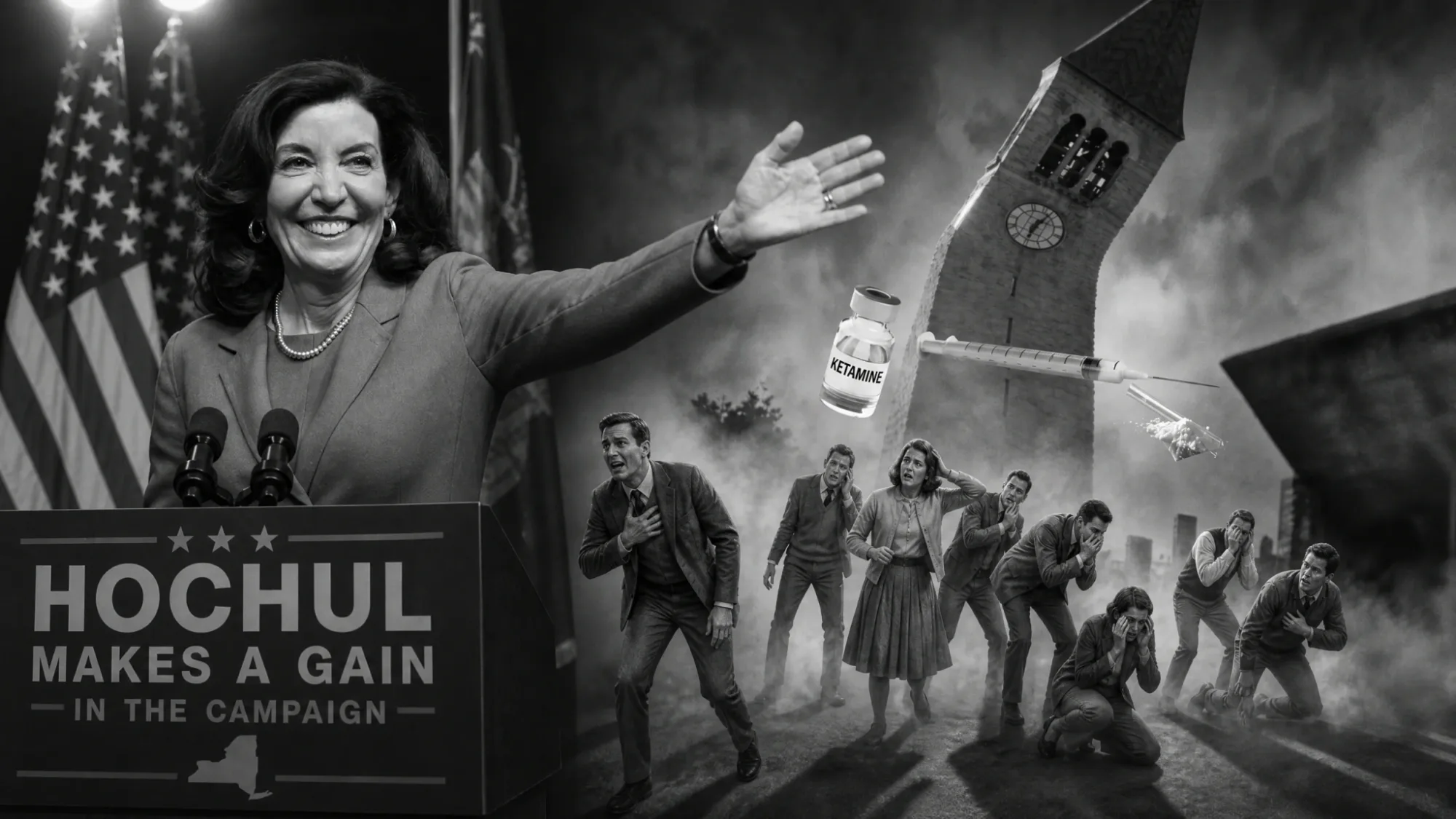
Hochul has reasons to care about that political advantage. Siena’s September 23 poll put her ahead of Republican contender Bruce Blakeman, 50% to 41%, while Blakeman led among independents and the candidates were nearly tied in the downstate suburbs. Hochul was leading, but the election was hardly something she could ignore. Siena’s pollster also recalled that she had led Lee Zeldin by 17 points at a comparable stage in 2022 before winning by six. A governor defending a nine-point advantage has ample reason to value a story that excites her supporters and casts her as a decisive defender of women.
That is the PsyOp: a civil lawsuit becoming the vehicle for electoral mobilization. What I call the “Lindsay Clancy Democrats” describes the political sensibility, an audience programmed to receive the sympathetic female-centered narrative and hostile to skepticism about it. For them, Donald Trump is a rapist, all men are abusers, and all women must be believed, even after they murder their children because a woman has the right to kill an unborn child at the end of the thirtieth trimester just as much as they do at the end of the third. In fact, for that cackle of crones and their ball-less, Tampon Tim-clone hangers-on, it’s a moral imperative, if that’s how she “feels.”
The danger of the Cornell Seven case comes when examining disputed evidence is recast as attacking women, and political officials find themselves rewarded for promising the ending that audience wants. A rape investigation becomes a witch hunt, with reputational punishment arriving before a prosecutor has established a charge.
Hochul should answer whether she will defend James if the investigation defeats that expectation. Independence has little value if it lasts only while the evidence serves the governor’s presentation. The credibility test comes when an investigator has to tell the politicians and their cheering section that the facts will not cooperate.
Giuffra’s Private Case, Albany’s Megaphone
Giuffra is pursuing a civil action seeking money from individuals and institutions. His 101-page complaint, filed September 16 in New York County Supreme Court, names Cornell, fraternity and sorority entities, the Moonies bar operator, the seven men, and other defendants. It demands a jury trial and seeks compensatory damages, punitive damages, and costs and attorney’s fees where permitted. Negligence, contract claims, alleged statutory violations, and a Dram Shop claim broaden the lawsuit beyond the conduct attributed to the men.
These are civil claims requiring proof against the defendants that Lucy Craig claims are responsible for personal injuries.
Hochul’s intervention changes the nature of the animal, giving Giuffra’s advocacy substantial political reinforcement. A lawyer arguing that institutions failed his client can now point to the governor’s judgment that the local investigation deserves a fresh examination. His October 2 CNN interview made his satisfaction clear: he welcomed Hochul’s action and James’s involvement, and said he had been preparing to request a special prosecutor himself. I regard that praise as sycophantic, especially when enthusiasm for the officials threatens to obscure the obligation to question them.
Giuffra has every right to press his client’s case. Hochul has a different obligation: she must ensure that a public criminal investigation remains independent of a private litigant’s objectives. James must examine evidence that undermines the complaint with the same vigor she applies to evidence supporting it. The governor’s intervention cannot become an endorsement that Giuffra’s allegations are true, and the criminal inquiry cannot owe the civil plaintiff a favorable result simply because her lawyer has praised the people conducting it.
That distinction is central to this political critique. Hochul benefits from the appearance of decisive leadership, while Giuffra benefits from a powerful official response to the failures he alleges. New Yorkers should scrutinize the decisions beneath that mutually flattering presentation, particularly when the officials invoking independence have already spoken in terms that appear to embrace the accuser’s account.
Kathy Hochul’s Cornell Seven PsyOp: The Evidence Is an Inconvenient Witness
Frank Parlato’s comparison of the sworn statement and complaint identifies differences involving initial agreement to sexual activity, ketamine consumption, and whether participants stopped when asked. The lawsuit alleges incapacity and assault throughout the night. Earlier messages and later messages also characterize the events differently.
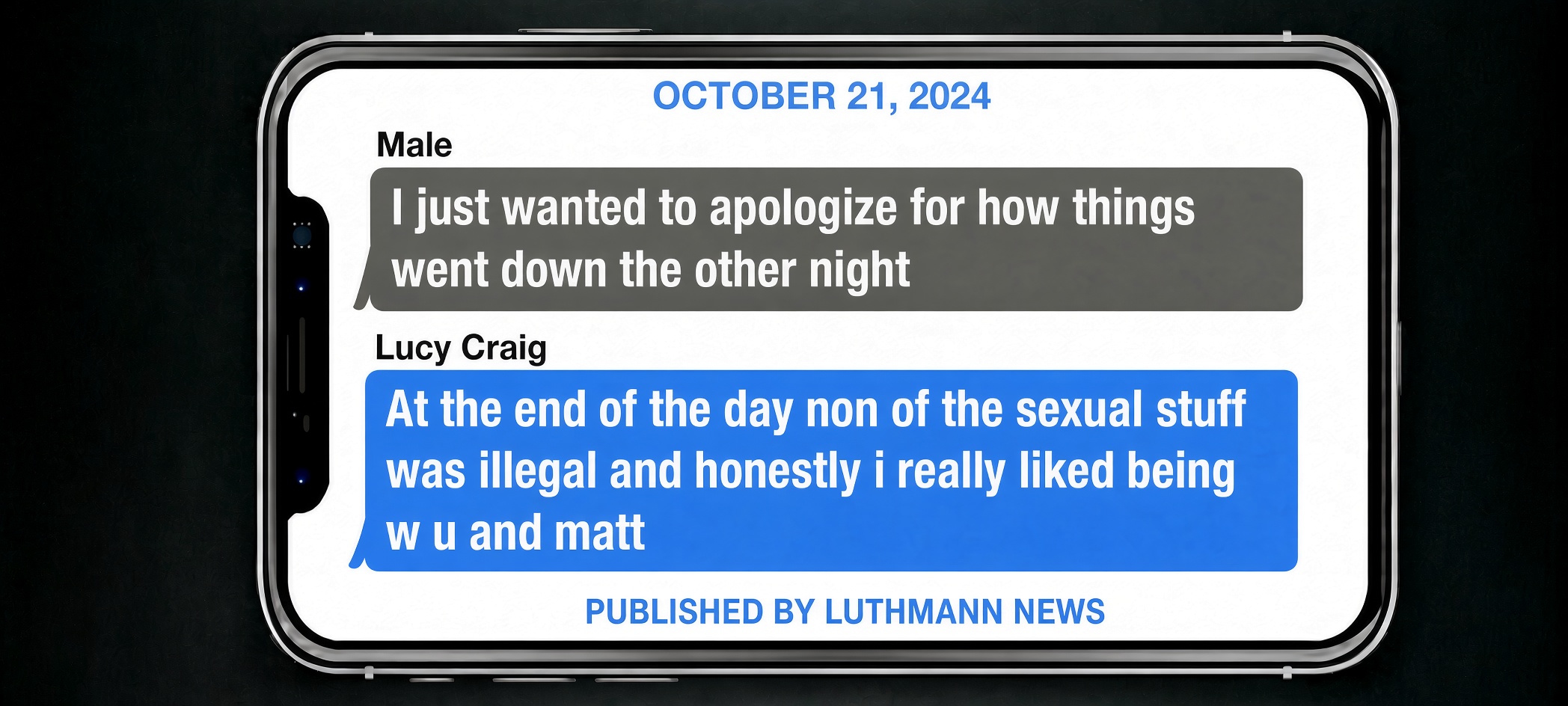
Giuffra must explain those discrepancies through the chronology and the conduct attributed to each participant. A sweeping interpretation of the entire night cannot do the work of establishing what happened during each encounter.
The authorities have an evidentiary problem too. Parlato reports that descriptions of coercion and extreme intoxication in the full sworn statement were omitted from the district attorney’s public summary, and that the police interview included an explicit rape allegation. That prevents anyone from treating the summary as the complete account. Investigators must determine what Cornell police supplied, what prosecutors reviewed, and why charges were initially declined.
An investigation demands accountability, but it cannot automatically establish that every accused man committed sexual assault.
On CNN, Pamela Brown pressed Giuffra about records describing initial consent. He maintained that none of the encounters were consensual because his client was intoxicated. When asked about one man’s claim that he was too incapacitated to consent to oral sex, he dismissed it as “ridiculous” and “ludicrous.”
That response deserves serious scrutiny. If incapacity is central to the plaintiff’s theory, a competing incapacity claim must be tested on its evidence. The lawyer’s incredulity does not answer the question.
James also has to apply the relevant legal standards. New York’s definitions distinguish mental incapacity from a substance administered without consent and physical helplessness, which includes unconsciousness or another physical inability to communicate unwillingness. Voluntary consumption does not automatically resolve physical helplessness, and intoxication alone cannot replace proof of the applicable offense.
Hochul’s proposed expansion of intoxication law, examined in Parlato’s analysis, cannot retroactively criminalize previously lawful conduct. The alleged 2024 events must be evaluated under the law applicable to them.
The Accusers Outside Hochul’s Spotlight
The governor’s selective urgency becomes harder to defend beside our reporting on Ryan Flynn. Ryan accuses his cousin, former Erie County District Attorney John Flynn, of childhood sexual abuse. His September account came from custody and described disputed communications, substantial bail, and a guilty plea he says would have secured his release.
His abuse and retaliation allegations remain unproven, but they deserve independent examination. Erie County identifies District Attorney Michael Keane as John Flynn’s former first deputy, a relationship that makes demonstrable independence essential when Ryan challenges the office’s conduct.
The Flynn case is all the more important because accused child rapist John Flynn is one of Kathy Hochul’s long-time and closest political allies. Along with John Crangle (the Tonowanda Democrat Party Chair who reportedly had an affair with Hochul), Flynn and Hochul are the “Kennedys of Tonawanda.”
My February hunger-strike reporting had already raised Ryan’s claims and reported that Hochul’s office had not answered requests for comment before publication or in the eight months since. Parlato’s report on rape allegations involving James raises another comparison: a former employee alleges involvement by James and staff in a 2014 drugging and assault. James’s spokeswoman called the account “an outright lie.” Parlato reports no comparable special-prosecutor intervention.
Hochul should explain what standards govern outside review when accusations implicate established officials. She has lawful supersession authority under Executive Law § 63(2). But her use of that authority remains open to political scrutiny, and James must remain free to contradict the narrative surrounding her appointment. The appearance of impropriety and political motivations make that a practical impossibility.
Duke Lacrosse demonstrated why: on April 11, 2007, North Carolina Attorney General Roy Cooper dismissed the remaining charges and declared the three accused players innocent. Cornell must be decided on Cornell’s evidence, with an inquiry capable of reaching a conclusion that disappoints the politicians who demanded it.
Hochul is exploiting the Cornell controversy as an election-season cause, with a civil lawsuit fueling outrage and Giuffra applauding the officials whose intervention advances his million-dollar demands. Her credibility now depends on accepting scrutiny of that political use, explaining the contrast with Ryan Flynn, and defending the investigation’s result even if it ruins her rescue narrative.
That is why Donald Trump is the political smokescreen. Trump outrage (TDS) allows an E-ZPass lane bypassing critical thinking and scrutiny, straight to Kathy Hochul’s “Land of Make Believe.” Donald Trump, the Cornell Seven, men in general: EVIL, RAPISTS, ABUSERS. Kathy Hochul, Letitia James: RESCUERS. Democrat Party: GOOD.
Because if New Yorkers have reason to see Kathy Hochul’s intervention for what it is, another campaign production financed with the authority of the state, then we may very well have a Bruce Blakeman surprise come Election Night.
Original source: https://luthmann.substack.com/p/kathy-hochuls-cornell-seven-psyop
No comments yet. You can be the first without creating an account.