
Media Metadata
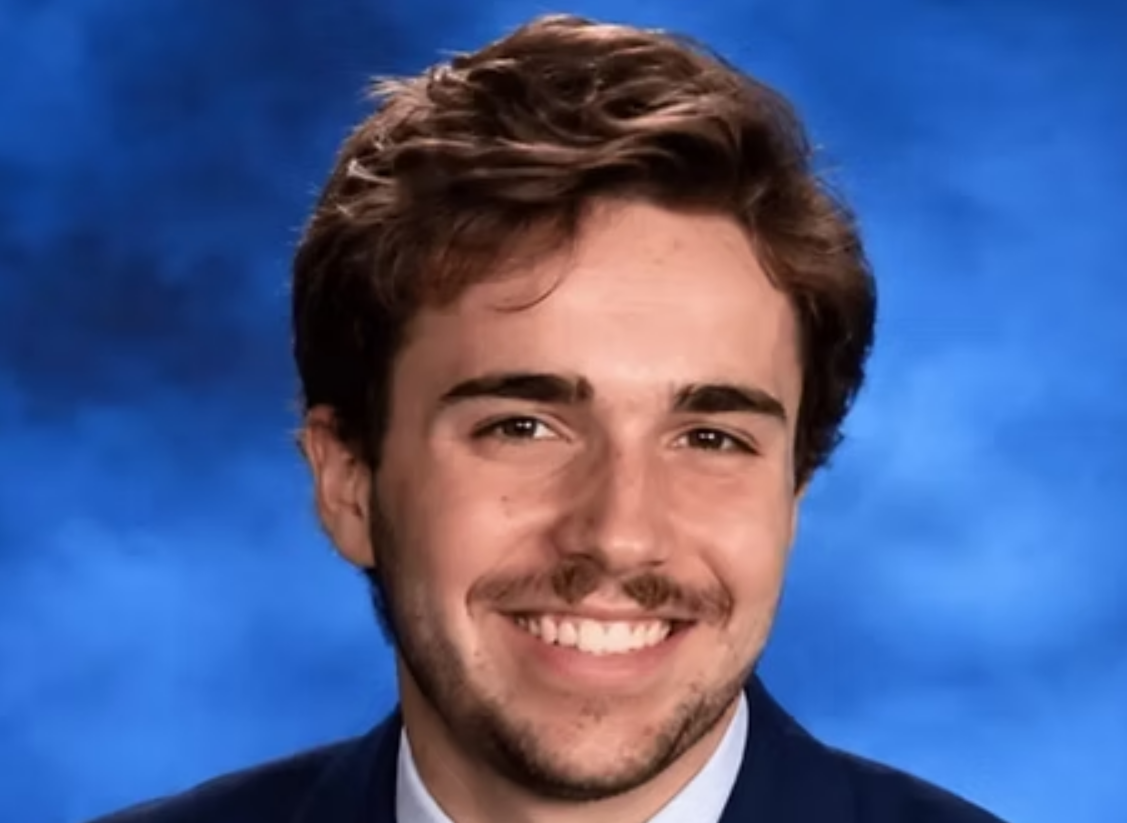
Scott Norris, a former Cornell undergraduate and member of Chi Phi's Xi Chapter, has retained legal representation in the ongoing Cornell University litigation, according to attorney appearances recorded on October 12, 2026.
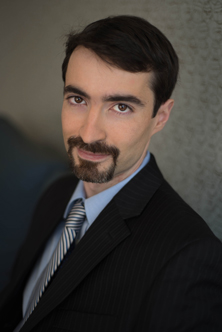
The attorneys listed as appearing on his behalf are Mark Cuccaro and Raphael Asher Friedman of Sher Tremonte LLP, a law firm whose involvement marks another development in a lawsuit that continues to raise questions about the evidence supporting the allegations against individual student defendants.
Who Is Scott Norris?
Norris is one of seven student defendants named in the civil complaint involving events allegedly occurring at Cornell's Chi Phi fraternity.
The complaint alleges that Norris participated in an incident in which students poured lines of ketamine onto the plaintiff's body and snorted the substance while she lay on a bed. The allegations remain contested and have not been established as facts by a court.
Norris, for his part, has consistently denied even witnessing the alleged events. According to the account available to this publication, Norris maintains that he entered the room only after the events in question had ended.
He reportedly was required to complete sexual harassment education and write an essay concerning his conduct. Those disciplinary measures, standing alone, do not establish that the broader allegations in the civil complaint are true.
The Snapchat Screenshot That Raises More Questions Than Answers
Media Metadata
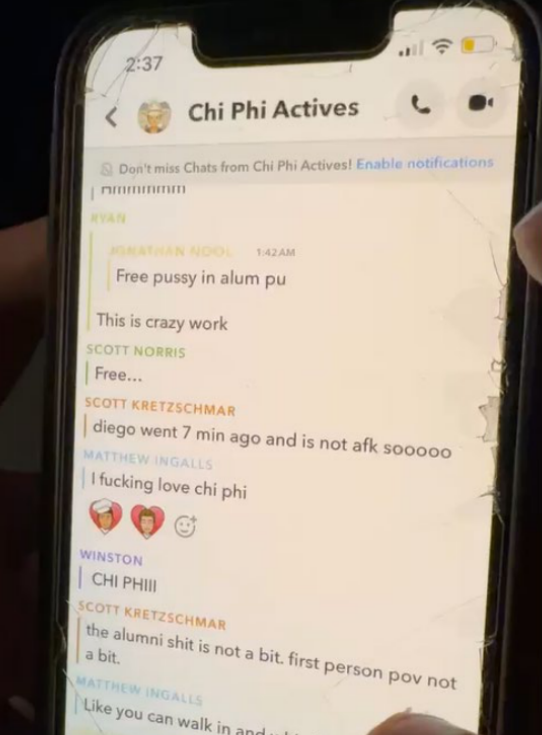
One of the more revealing pieces of material reproduced in the complaint is a photograph of a Snapchat group conversation titled "Chi Phi Actives."
The screenshot shows a message attributed to Jonathan Newell advertising sexual access to Lucy Craig, followed by comments from other group participants.
Among those visible is an account identified as SCOTT NORRIS, which responds simply:
"Free..."
That's it. At least in the screenshot presented.
The image also contains messages attributed to Scott Kretzschmar, Matthew Ingalls, Winston Lee, and Jonathan Newell.
Here's where the evidentiary questions become particularly interesting.
The group reportedly contained more than 52 participants, yet the publicly reproduced screenshot identifies only a handful. Strikingly, the only student defendants named in the complaint appear to overlap with the individuals whose names can be identified in this one snapchat group conversation photograph.
Is that a coincidence?
Perhaps. But it raises a legitimate question about how the plaintiff identified the individuals she ultimately chose to sue.
Was the Lawsuit Built Around a Single Screenshot?
In this publication's opinion, Norris's inclusion in the lawsuit raises an especially important question: Was he named because investigators possessed independent evidence of his alleged participation, or because his name happened to appear in the Snapchat photograph?
His only visible contribution, "Free...", does not, by itself, establish that he was physically present during the alleged events, witnessed them, or participated in the conduct described in the complaint.
The reported size of the Snapchat group makes the distinction particularly important.
If more than 52 individuals participated in the conversation, why do the identifiable accounts in this photograph correspond so closely with the individuals ultimately named as defendants and no one else?
One possible explanation is that this photograph represents the principal surviving visual record of the conversation available to the plaintiff when the complaint was prepared.
Another is that additional messages, witnesses, testimony, or investigative evidence exist but have not been publicly disclosed.
We do not presently know which explanation is correct.
The overlap is worth examining, but it is not proof that no additional Snapchat records exist or that the lawsuit rests exclusively on this photograph.
That is precisely why discovery, preservation records, and the complete evidentiary history matter.
Norris's Account Versus the Complaint
The distinction between what the complaint alleges and what Norris reportedly maintains is substantial.
The complaint describes direct participation in serious misconduct.
Norris's account places him in the room only after the alleged events concluded.
Both accounts cannot fully describe the same sequence of events.
If Norris's account is corroborated, it could materially undermine the allegation that he personally participated in the conduct attributed to him. If the plaintiff possesses independent evidence placing him at the scene during the alleged events, that evidence deserves examination.
Either way, a two-word Snapchat response is not a substitute for proof of physical participation.
New Counsel Enters the Case
Media Metadata
The October 12, 2026 attorney entries identify:
-
Mark Cuccaro of Sher Tremonte LLP
-
Raphael Asher Friedman of Sher Tremonte LLP
Their appearances signal that Norris now has counsel positioned to challenge the claims against him, examine the evidence, and address the substantial difference between his reported version of events and the allegations in the complaint.
Whether his defense will focus on the Snapchat evidence, the timing of his arrival, witness accounts, or additional factual disputes remains to be seen.
The Bigger Question
Scott Norris's case illustrates a broader concern with litigation arising from alleged group misconduct: the danger of treating association, membership, or participation in an electronic conversation as interchangeable with proof of individual wrongdoing.
Being a member of a fraternity does not automatically establish participation in every event involving that fraternity.
Appearing in a group conversation does not automatically establish physical presence.
And an ambiguous response in a Snapchat thread does not, without more, establish the acts alleged in a civil complaint.
The plaintiff has made serious allegations, and those allegations deserve an evidence-based examination. But each defendant is equally entitled to challenge the accusations and demand that his individual conduct be proven rather than inferred from group membership or a photograph.
For Scott Norris, the central question remains remarkably straightforward: What evidence, beyond his appearance in a Snapchat screenshot, establishes that he participated in the alleged events?
With Sher Tremonte LLP now appearing on his behalf, that question may receive considerably more attention as the case progresses.
Comments & replies
No account is required. Comment anonymously, or sign in with a pseudonymous account if you want to manage your comments later. Comments are user speech, not editorial findings.