BREAKING: Thomas Giuffra’s Cornell Seven Gambit
A removal request and incomplete signature redaction put Cornell Seven Jane Doe Lucy Craig’s lawyer’s media campaign under scrutiny.
By Richard Luthmann — October 10, 2026
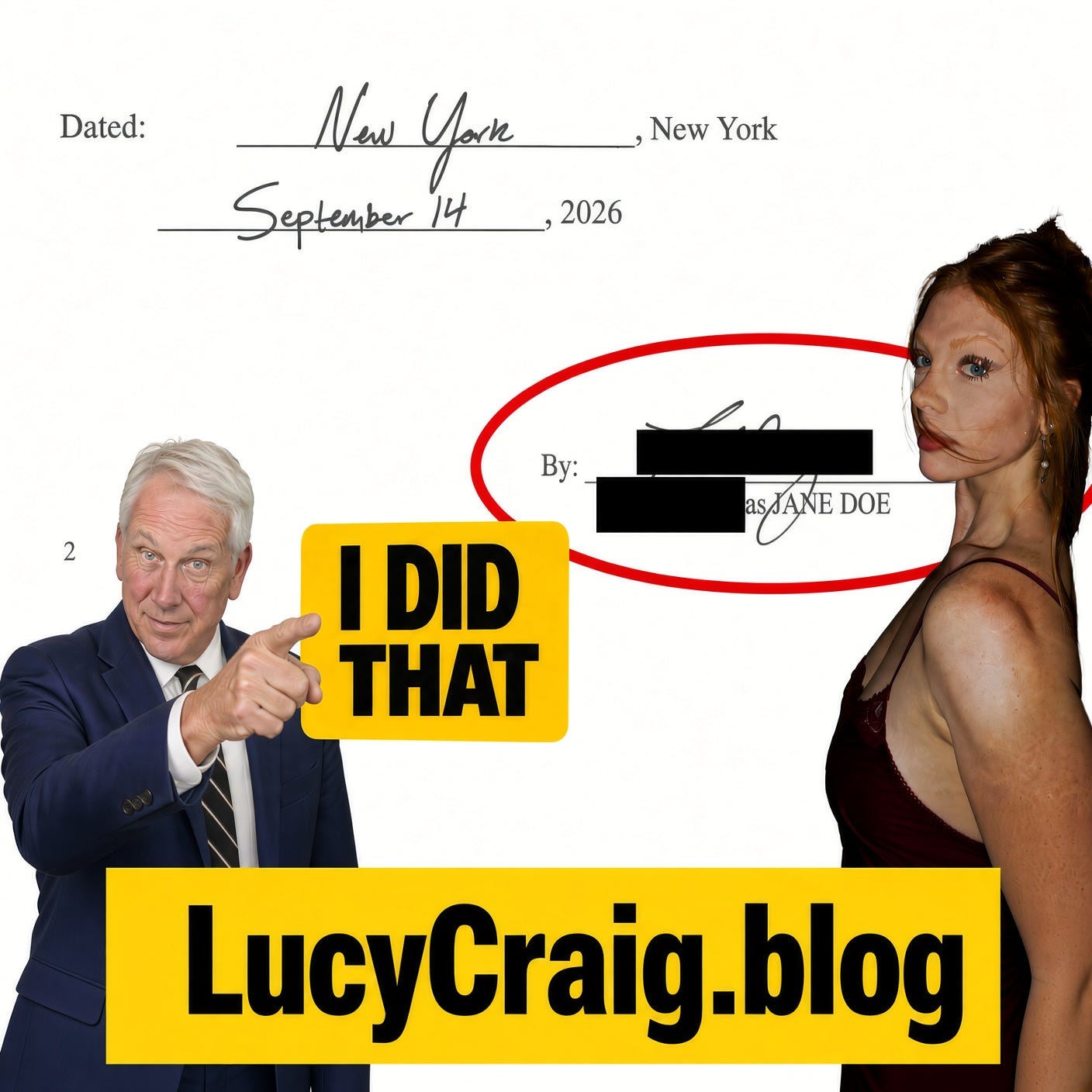
LUTHMANN NOTE: Albany has turned the Cornell Seven story into political theater. Now, a mysterious blog, LucyCraig.blog, is swirling at the center of the controversy. We spoke with those who purport to administer the blog, who supplied a DMCA removal request by Cornell Seven Jane Doe accuser Lucy Craig‘s attorney, Thomas Giuffra. Without any basis, Giuffra threatened action under the Digital Millennium Copyright Act (DMCA) in a transparent attempt to censor criticism of his client. In so doing, he further confirmed his client’s identity. Giuffra’s activity deserves a hard look alongside his television and media campaign where he gets the microphone, his lawsuit gets attention, and New York’s top politicians get to pose as rescuers. Independent journalists get to examine the production. My experience as a journalist, former attorney, and political operator makes me suspicious when publicity is welcome until somebody asks the wrong question, and then the censors pounce, and the threats rain down. Protect people from bona fide (not self-inflicted reputational) threats, test the allegations, and make the lawyer defend the authority he invokes. Giuffra can argue his case. He does not get to appoint himself managing editor of the American press. This piece is “Thomas Giuffra’s Cornell Seven Gambit,” also available on NY News Press and LucyCraig.blog.
By Richard Luthmann
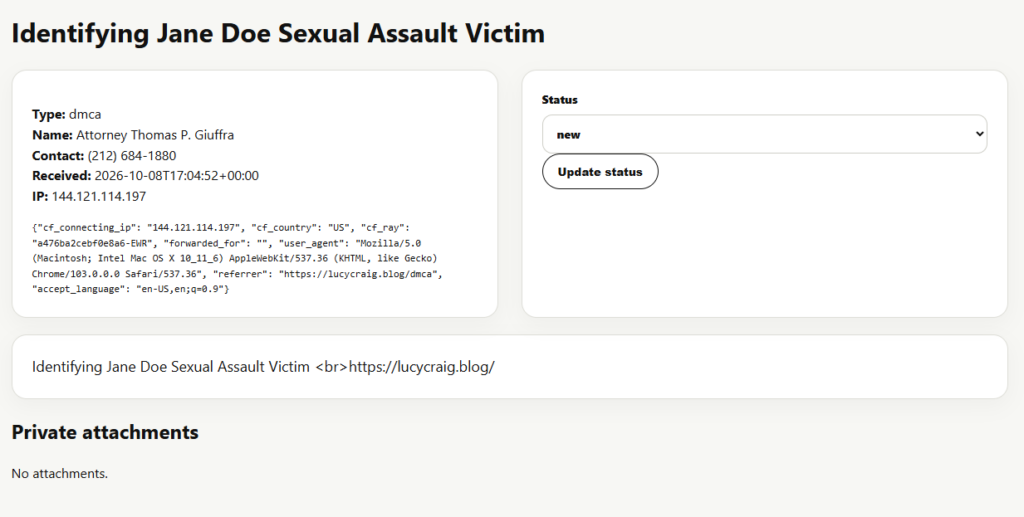
Thomas P. Giuffra, attorney for Cornell Seven Jane Doe accuser Lucy Craig, is seeking to shape the narrative by trampling the First Amendment. The Manhattan lawyer is seeking removal of online material identifying his client at LucyCraig.blog, according to a protected source who supplied Luthmann News with a screenshot of a complaint entered under Giuffra’s name and labeled “DMCA.”
The Digital Millennium Copyright Act (DMCA) is a 1998 federal law governing copyright protection online. Its notice-and-takedown process allows copyright owners to request removal of allegedly infringing material, but an effective notice must identify the copyrighted work and the material claimed to infringe it.
The lawyer who has taken his client’s allegations to national television is now being linked to an effort to pull coverage off the internet.
Giuffra can demand an investigation, applaud Kathy Hochul, and tell Chris Cuomo why his client needs protection. Publishers, bloggers, and investigators are equally entitled to examine his case, his public claims, and the authority he invokes against them.
I spoke with an individual who described themselves as an administrator of the blog receiving the request and attributed it directly to Giuffra. The screenshot records receipt on October 8 at 1:04:52 p.m. Eastern, under the subject “Identifying Jane Doe Sexual Assault Victim.”
The visible entry identifies the website, but shows no copyrighted work, infringement explanation, or attachment. The source’s account supplies the attribution; the screenshot supplies the displayed complaint. The reported request now deserves examination alongside the lawyer’s public campaign portraying his client as under attack.
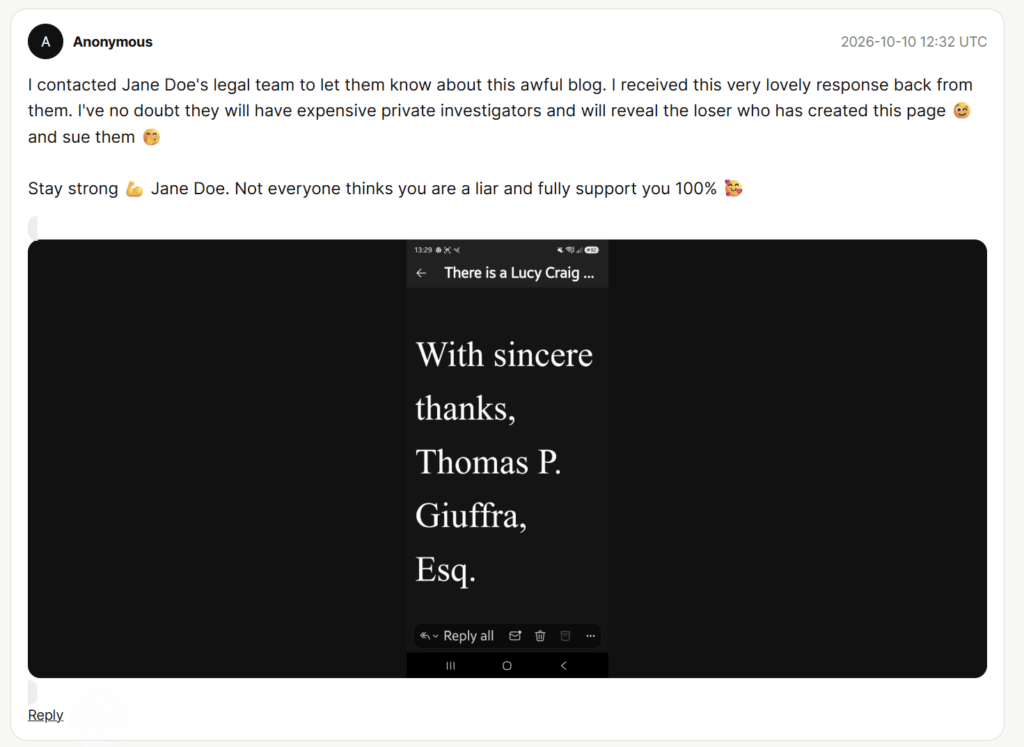
An October 10 blog posting adds another indication that Lucy Craig’s legal team has been alerted to the site: an anonymous commenter reports contacting the attorneys and displays a purported reply bearing Thomas P. Giuffra’s signature. The commenter predicts that “expensive private investigators” will identify the creator and that litigation will follow.
The blogger said they “welcome it.”
“We are number one on Google when you type in ‘Lucy Craig.’ We are fully protected, not subject to the jurisdiction of the New York courts, and cannot be silenced. We have created a forum for free speech and truth,” the blogger said.
Thomas Giuffra’s Cornell Seven Gambit: Copyright Law Isn’t a Shut-Up Button
The Digital Millennium Copyright Act has requirements, however inconvenient they may be to somebody seeking quick removal. Under 17 U.S.C. § 512(c)(3), an effective notice must substantially identify the copyrighted work and the claimed infringement, establish the sender’s authority, and contain the required statements and signature. A complaint about publishing a name does not establish those elements.
The Copyright Office says names are not protected by copyright. An original photograph, video, or other work can raise a separate issue, but a person’s identity does not become copyrighted property because its publication inconveniences a lawsuit. Congress did not hand civil attorneys a federal “shut the hell up” switch.



The website may have classified a privacy objection under its DMCA category. That makes the original request important: what did Giuffra actually assert, and what did he ask the publisher to remove? If he asserted copyright infringement, identify the work. If he asserted privacy, identify the authority.
My earlier reporting on the claimed identification and the now-debunked eCourtRecords.org trail make the provenance consequential. A third-party listing cannot, by itself, prove that a court clerk leaked identifying information, and several outlets repeating one identification do not become several independent confirmations.
Those questions require records and answers.
Your Lawsuit Doesn’t Own the Newsroom
The plaintiff’s anonymity application in Jane Doe v. Cornell University, Inc., et al., New York County Supreme Court, index 161704/2026, describes whom she wanted restrained. The copy displayed in the blog’s document library requests permission to proceed under a pseudonym and an injunction against defendants and their agents disclosing her identity beyond their attorneys.
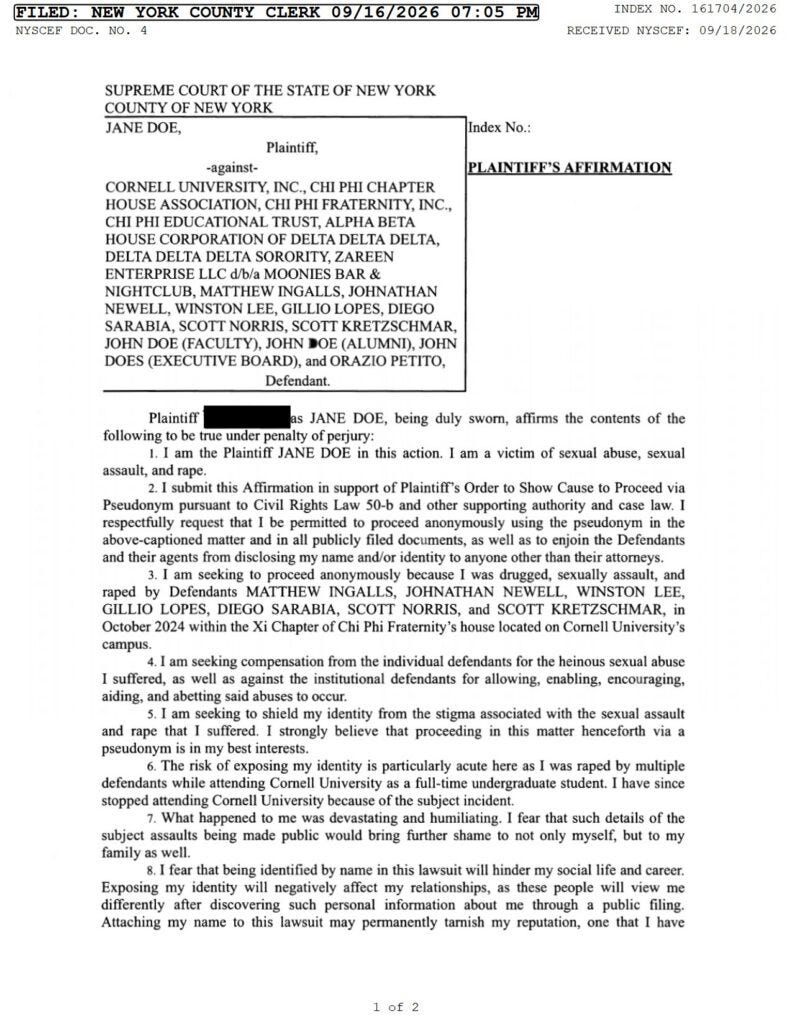
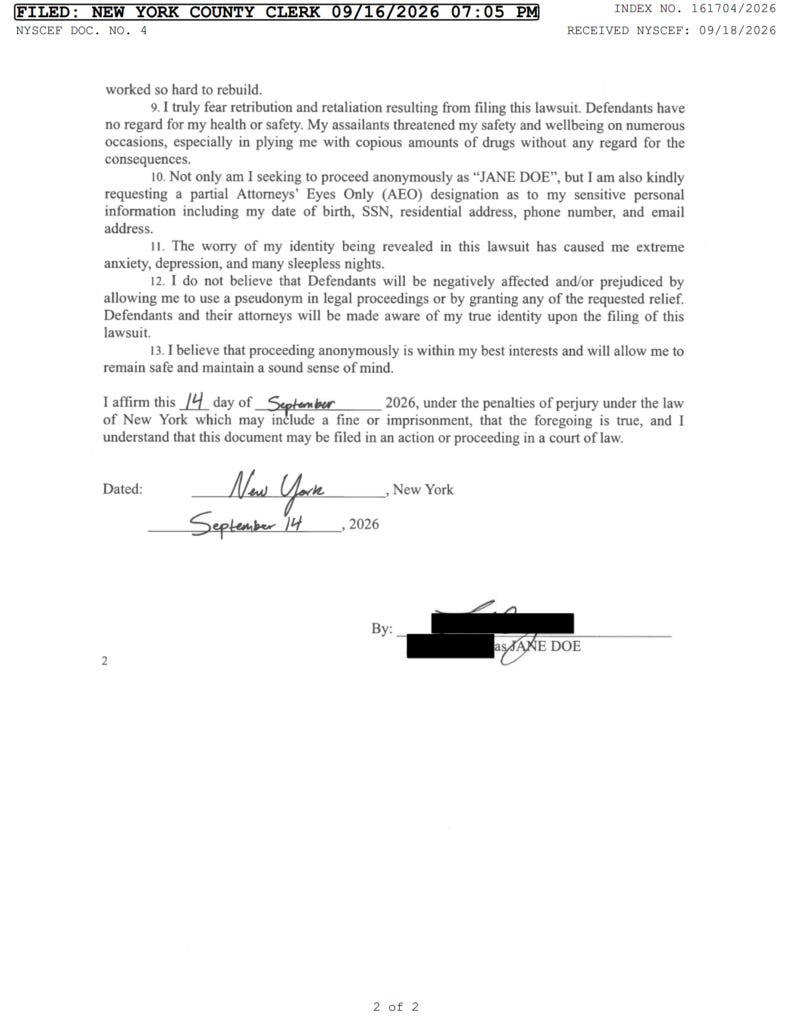
Its accompanying page seeks protection for sensitive personal information. The document reviewed is an application, not an authenticated signed order. But the requested targets are clear: defendants and their agents. An independent publisher does not become somebody’s agent because it questions the plaintiff’s version of events. Disagreement with Giuffra is not a summons enrolling a journalist in his lawsuit.
The actual order, its wording, and any relationship between a publisher and a litigant would determine the analysis. In Zenith Radio Corp. v. Hazeltine Research, 395 U.S. 100 (1969), the Supreme Court explained that merely notifying a nonparty of a federal injunction was insufficient for contempt without the necessary concert or participation.
New York Civil Rights Law § 50-b supplies substantial confidentiality protections, including restrictions on identifying records held by public officials; it does not eliminate constitutional scrutiny of punishment imposed on publishers. A private request is not itself government censorship, and platforms can enforce their own rules. Invoking a judge’s power requires more.
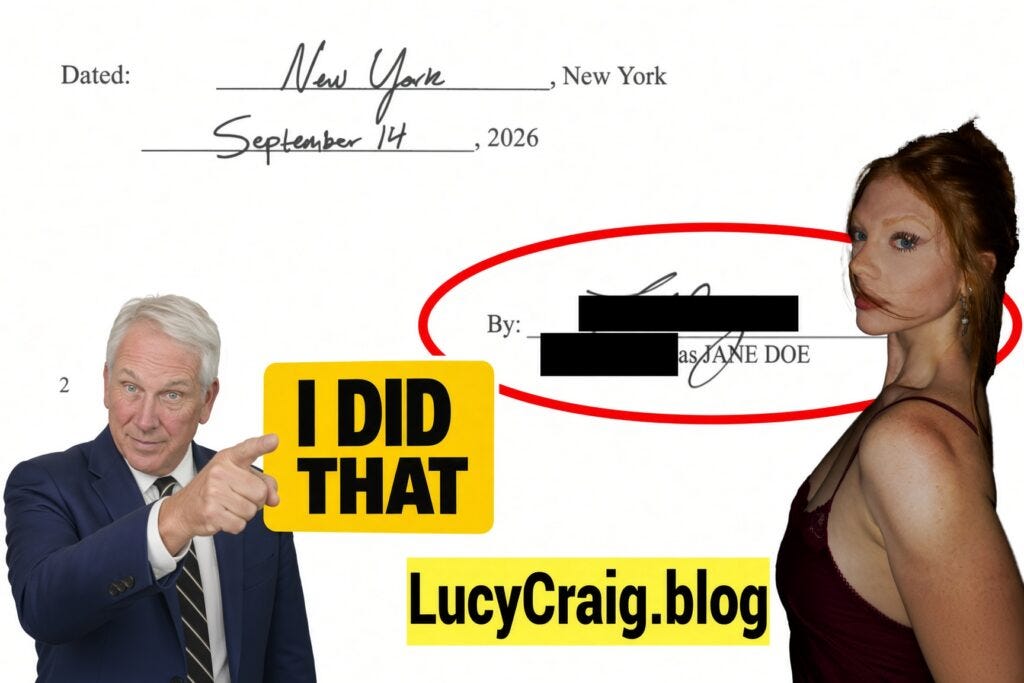
The source describes LucyCraig.blog as foreign-hosted, which creates an additional jurisdictional hurdle. However, the stronger argument needs no exotic server geography: produce the authority that supposedly binds the publisher from engaging in commentary, opinion, and scrutiny of public matters.
“We’re getting over a million hits a day. Clearly the marketplace of ideas has spoken,” the source said.
CUOMO Gets the Interview. Critics Get the Complaint.
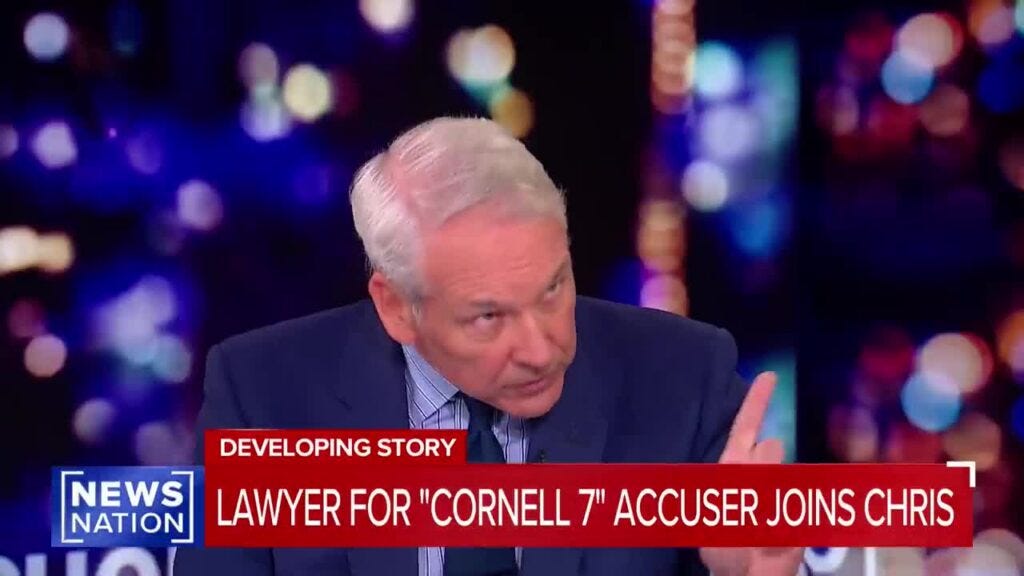
Attorney Giuffra’s appearance with Chris Cuomo, discussed in my October 8 column, put his client’s cause and Hochul’s intervention before a national audience. His public framing of the accuser as under attack now belongs beside this reported removal request.
On CNN’s October 4 State of the Union, Giuffre described threats demanding that his client withdraw her lawsuit, said other women had been wrongly identified and threatened, and reported receiving a threat himself. Those are serious claims. But they do not establish that every skeptical article participates in the threatening conduct, or answer whether a particular publisher infringed a copyright.
As an attorney, Giuffra knows better. He cannot make the worst person in an internet comment section the spokesman for everyone examining how he prosecutes his Lucy Craig’s case.
Michael Tracey’s October 1 account describes harassment reaching his relatives and unrelated occupants of his former home. He defended scrutiny of anonymity in civil litigation while asking that those people be left alone. The ugliness does not belong exclusively to one side’s preferred narrative.

Meanwhile, Frank Parlato’s comparison of the sworn statement and complaint identifies disputes about consent, intoxication, and chronology, along with coercion passages omitted from the prosecutor’s summary. Those records deserve examination in full.
Giuffra can seek protection for his client while answering uncomfortable questions about her claims. The public courtroom and the television studio cannot become a paired arrangement in which his allegations receive national amplification while scrutiny gets treated as an intrusion.
Thomas Giuffra’s Cornell Seven Gambit: Albany’s Political Production Meets the First Amendment
Giuffra’s problem is that the U.S. Supreme Court has already confronted the collision between an accuser’s privacy and a publisher’s constitutional rights. In Cox Broadcasting Corp. v. Cohn, 420 U.S. 469 (1975), the Court barred civil liability for accurately reporting a sexual-assault victim’s name obtained from official judicial records open to inspection.
In The Florida Star v. B.J.F., 491 U.S. 524 (1989), it overturned damages imposed on a newspaper that lawfully obtained identifying information from a publicly released police report.
And Nebraska Press Association v. Stuart, 427 U.S. 539 (1976), establishes the heavy constitutional burden facing an effort to restrain publication.
Accuracy, lawful acquisition, and the circumstances of disclosure matter. A lawyer seeking to punish reporting must confront those decisions, rather than wave an anonymity application as though it were a warrant to search every newsroom for disobedience.
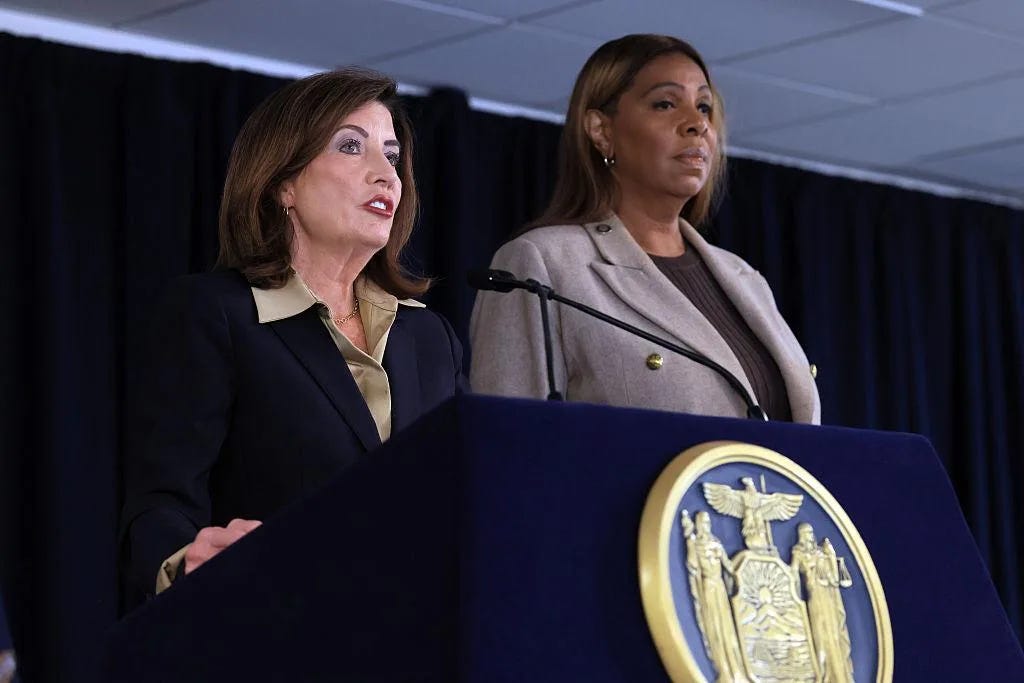
Hochul’s October 1 executive order put Letitia James in charge of investigating and, if warranted, prosecuting the Cornell allegations. The order itself demands an independent investigation guided by evidence. That makes the handling of this case public business: the governor’s intervention, the prosecutor’s independence, the disputed records, and the civil lawyer’s campaign for attention.
It is lost on no one that it is October before November elections. It raises the unavoidable question whether the Governor and Attorney General’s Cornell Seven presentation has become a political PsyOp, with the lawsuit supplying emotional fuel for an election-season rescue narrative. That judgment concerns the use of the case; the underlying allegations still require investigation.
Albany, and its sycophantic ambulance-chaser lawyers, cannot turn the machinery of justice into a televised demonstration of its compassion and then expect journalists to applaud without inspecting the machinery.
Giuffra has taken his client’s allegations to national television. He should expect examination of the documents supporting them, including the incomplete signature redaction in the very filing seeking anonymity. If he claims authority to compel an independent publisher to remove coverage, he should produce the actual order, identify whom it binds, and explain the constitutional basis for enforcing it.
A reported removal request does not answer those questions. Neither does calling scrutiny an attack.
Hochul, James, and Giuffra can defend their decisions before the public, but they cannot reserve the microphone for themselves and treat everyone publishing information and asking uncomfortable questions as an intruder.
If Cornell Seven accuser Lucy Craig’s Attorney, Thomas Giuffra, wants to control a publication, he can buy one. Until then, the press owes him accuracy, not obedience.
Original article: https://luthmann.substack.com/p/breaking-thomas-giuffras-cornell