
Media Metadata
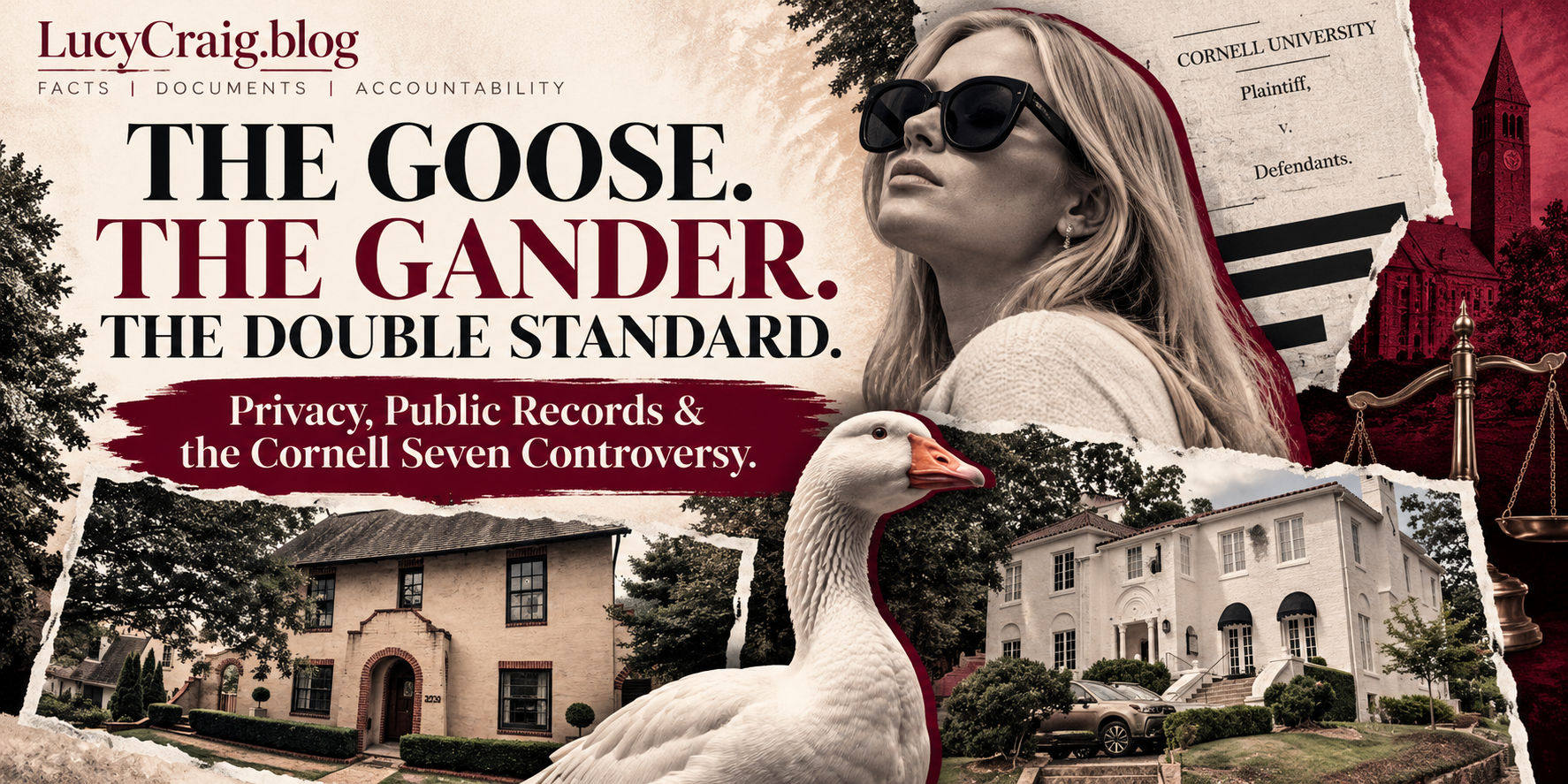
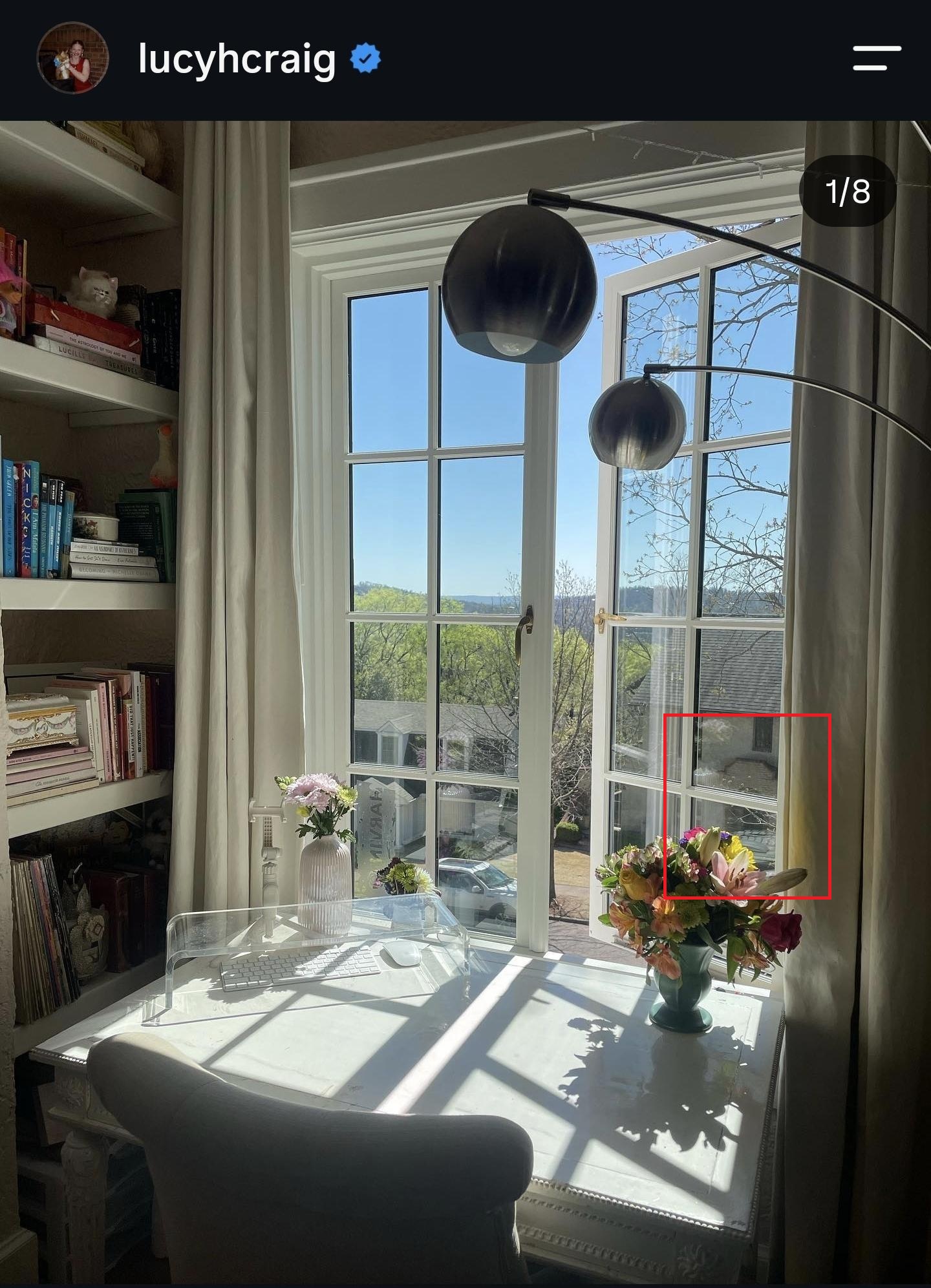
Apparently, privacy is sacred. But only when it belongs to the ultra rich pretend victim Lucile H. Craig of Aberdeen Road, Birmingham, Alabama.
That is the extraordinary contradiction at the heart of the controversy surrounding Lucile H. Craig, the Cornell Seven litigation, and the public identification of men accused of serious misconduct before those accusations have been fully adjudicated.
The question is not whether an accuser deserves privacy. The question is why that principle should apparently operate in only one direction.
Media Metadata
THE REPUTATIONAL DAMAGE CANNOT BE UNDONE
Through litigation initiated on her behalf, Craig's attorneys placed serious accusations into the public record. Those filings exposed the identities and personal information of men whose reputations could be permanently affected, regardless of the eventual outcome.
More troubling are reports that at least two individuals were incorrectly implicated or subsequently removed or corrected in the litigation.
One was an active-duty United States Marine reportedly unconnected to Cornell. Another was a former fraternity president reportedly uninvolved with the fraternity during the relevant events.
The implications are appalling.
A correction to a legal filing does not magically erase a search-engine result. Removing a name from a complaint does not retrieve every screenshot, reverse every social-media accusation, or restore the reputation of an individual publicly associated with allegations in which he allegedly played no part.
The internet does not operate like a court docket. There is no automatic reputational expungement.
And that is precisely why the publication of personal information in litigation carries consequences far beyond the courtroom.

Media Metadata
ATTORNEYS DO NOT OPERATE IN A VACUUM
Legal filings are not spontaneous natural disasters. They are prepared, reviewed, signed, and submitted by attorneys acting for their clients.
A plaintiff cannot reasonably demand that the public ignore information disseminated through litigation conducted on her behalf while simultaneously expecting every aspect of her own public narrative to receive extraordinary protection from scrutiny.
Attorneys have professional responsibilities. Clients have interests and agency. The public has an interest in examining the consequences of allegations distributed through judicial proceedings.
Those interests do not disappear merely because one litigant prefers anonymity.

Media Metadata
THE GOOSE AND THE GANDER
There is an old expression about what is good for the goose being good for the gander.
Here, the principle is straightforward.
If privacy matters, it matters for everyone.
If reputational damage matters, it matters for everyone.
If public identification can cause lasting harm, then the consequences deserve attention whether the person affected is an accuser, a defendant, or someone reportedly named in error.
What cannot command automatic respect is a selective theory of privacy under which one person's reputation receives extraordinary solicitude while the reputations of others are treated as expendable collateral damage.
That is not a principled approach to privacy.
It is a double standard.
THE COURTROOM IS NOT THE ENTIRE PUBLIC SQUARE
Court orders governing anonymity and the conduct of litigants raise questions distinct from the rights of independent journalists and commentators.
The scope of a particular order depends on its language, the parties it binds, and applicable law. But the broader editorial issue remains: legal anonymity does not automatically make a litigant's conduct, public statements, litigation strategy, or the consequences of the proceedings immune from criticism.
Independent publishers have an important role in examining court proceedings, especially where allegations have attracted public attention and may cause irreversible reputational damage.
That includes scrutinizing the accuracy of allegations, the decisions made by attorneys, the treatment of individuals subsequently removed from litigation, and the consistency with which privacy principles are applied.
PUBLIC SCRUTINY IS NOT A ONE-WAY STREET
The Cornell Seven controversy presents difficult questions about allegations, evidence, fairness, privacy, and the presumption of innocence.
Those questions deserve rigorous public examination.
LucyCraig.blog rejects the proposition that reputational consequences are acceptable for accused men, including individuals reportedly named incorrectly, but inherently unacceptable when public scrutiny turns toward the plaintiff's own decisions and litigation.
We will continue examining the public record, challenging inconsistencies, questioning the conduct of attorneys, and documenting the consequences of allegations that may prove inaccurate.
We will not confuse the filing of an accusation with proof.
We will not confuse the correction of a complaint with the restoration of a reputation.
And we will not accept the notion that privacy is a privilege reserved for one side of a controversy.
THE GOOSE. THE GANDER. THE SAME STANDARD.
-Chief Justice William Rehnquist, majority opinion, 485 U.S. at 55.